There’s a room in your house that everyone uses, whether you’re in Los Angeles or Dubai. Cultural norms, local customs and simple convenience determine how society defines a toilet. We take this device for granted inconspicuously. We use it. We leave. We rarely think twice about it. That’s why traveling abroad can be a big shock when you encounter a foreign toilet for the first time. You’ll be surprised at how public and private facilities look like around the world.
Hygiene standards vary widely. Availability of disposable paper varies. Water availability changes the whole equation. As a result, humanity has developed different ways of dealing with natural functions. Even airplane toilets often don’t prepare you for what awaits you on the ground. The world offers many ways to get down to business. A warning helps you stay prepared.
Зміст
Porcelain throne: Western standard
In many Western countries, the standard is simple. Seat made of porcelain. Tank. Flush. To the locals, it seems as normal as apple pie and baseball. This structure requires a constant supply of toilet paper and a reliable plumbing system that can handle solid waste without clogging. This is a normal expectation for travelers from North America and Europe. But this convenience is not universal. In fact, in many parts of the world it is the exception.
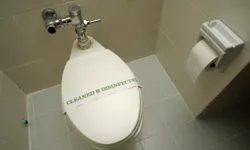
Americans are loud, bold and confident, but there’s a surprising amount of fussiness in the bathroom. WC’s vocabulary is endless, but expectation is singular. You enter, sit down, and find a white porcelain piece of furniture that is exactly 16 inches (40.6 centimeters) from the floor. It has a rim, a seat, a flusher within easy reach and a fresh roll of fluffy paper. It’s the standard.
This image of the modern commode has dominated the West since Thomas Crapper helped popularize the flush toilet in the late 19th century. Even in rural America, you can find a raised seat and a copy of Reader’s Digest in an outhouse. The site’s portapotties may smell of chemicals and things best left unmentioned, but they still follow the basic Western model.
But let’s be honest about the hygiene factor. It is dangerous to put bare skin on an unfamiliar rim. And since the bowl retains standing water until it’s flushed — even though dual-flush models try to conserve water — be prepared for a splash-back to be a real possibility.
9: Squat toilets – the global standard
If you travel outside of major tourist centers or areas of major American fast food chains, chances are you’ll come across a squat toilet. This is the default setting in much of Asia, the Middle East, and parts of Europe and South America.
The design is brutally simple. You stand on top of a hole in the ground and squat with your legs on either side. From a hygiene point of view, your body touches nothing but the air and your own shoes. It keeps everything separate. (Side note: In Peru, keep an eye out for sloths that hang out near local squat spots. They’ve been camping there for 25 years and eating what remains of nature.)
The real challenge is not the position; it is an aftermath. What happens to the waste depends entirely on the local infrastructure:
- Straight to the train track
- Into a pigpen
- Straight into the sea
- Connected to drainage pipes
- Pressurized flush systems
- A deep, hopefully deep hole
Toilet paper is not a guarantee. Paper delivered outside the US and Europe may feel like sandpaper and you may even have to pay for it. If you can’t find tissue paper, look for a hose, a faucet, or a small red bucket. Use them.
It’s uncomfortable to sit on a hard porcelain pan and do the Sunday crossword puzzle, but from a medical perspective, squatting is often easier on the gut. Adapt or stay stuck.
8: Bidet – water option
In many parts of the world, the toilet is just the starting point. A bidet is the logical next step. It is a shallow basin next to or in front of the toilet that is used to wash the lower body with water.
This practice is standard in France, Italy, Japan and much of the Mediterranean. It is not a luxury; it’s hygiene. For travelers who are used to relying only on dry paper, switching to a bidet may seem strange at first. You have to learn the angle, the pressure and how to dry it afterwards.
But once you learn it, the difference is night and day. Water cleans better than paper. Paper simply moves things; Water removes them. It is gentle on sensitive skin and is much more effective in preventing irritation.
Some modern toilets combine both functions and integrate the bidet spray directly into the seat. These are common in Japan and are becoming more common in other high-end hotels. You press the button and the warm water jet does the job. No guessing. No waste. No paper.
For those who can’t adjust to the spray or don’t have access to a bidet, the alternative is often a handheld shower head known as a “bum gun” or “health faucet.” It’s less elegant, but it serves its purpose. The key is to know what you’re getting into before you sit down.
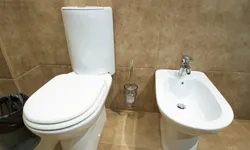
Navigating the Bidet Variety Pack
Don’t panic if you see a tap on the wall next to your seat abroad. You didn’t go to the wrong room. In many parts of the world, from Europe to the Middle East, the toilet is also a hygiene station. This preference is often due to cultural values surrounding cleanliness or simply a lack of toilet paper. The rule is strict: if there is no paper, don’t use your own. The sanitation infrastructure in these areas is not designed to handle solid waste, as is the case with Western sewers. Forcing the paper through can cause traffic jams, anger the locals and ruin your trip.
Most travelers will encounter one of three main bidet configurations. The first is the Standard bidet toilet. You can find these in urban areas all over Europe and Japan. They look like a regular toilet, but have a nozzle or button just behind the bowl. You lean forward, activate the shower and rinse as usual.
In many eastern countries you may find a shower-toilet combo. This is a practical water-saving design. The hose or shower head is installed on the wall above the squat toilet. You aim at the drain hole in the ground. Keep it simple. Don’t think too much about the angle.
Third, there is the spigot and bucket method. This system, which is common in rural Egypt and parts of Taiwan, does not include a hose. Instead, you fill the red bucket at the wall tap and pour water over yourself. It’s simple. It works.
7: Pay for the toilet – Pay the Pot
When traveling in Paris or other large European cities, take change with you. A fee is often charged for public toilets, which is usually less than a euro. In Finland, the rules are even more precise. To remotely open a paid toilet, you must send a text message to the National Road Service.
These spaces are usually clean. Many sanitize themselves automatically as soon as the door is closed. Pay attention to the timer. Do not loiter. If you stay too long, the door will unlock and disinfectant sprays will pour out of the vents in the walls. This is not a suggestion.
Do not try to avoid the payment by entering a stall that was just vacated. You might save a few coins, but you’ll probably end up doused in cleaning agents. The system detects recent usage. It splashes. You get wet. Better just pay.
The fixtures inside are usually Western-style, but the mechanics can be strange. The water tank can be mounted on the wall above your head or embedded behind you. Finding the flush button can be a challenge. It is often located near the sink instead of the toilet. Look around you. Some of these units are descendants of older models where the entire toilet unit folded back into the wall for cleaning before folding back. It is effective. It’s also a bit James Bond. Hard to picture the spy sitting on one, but the technology is undeniably clever.
6: Luxury Commodes – go in style
Japan didn’t just invent the bidet. They turned it into a way of life.
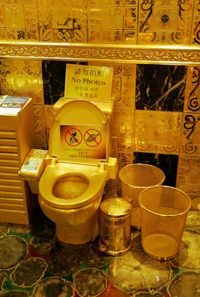
Check out this toilet-themed restaurant in Taiwan. Check out the “World’s Most Expensive Toilet” Award. The Asian market is pouring money into toilet culture. However, this crown still goes to Tokyo.
Companies like TOTO have engineered more than just porcelain. They build an ecosystems for your bottom. We are talking about heated seats. Remote controls that actually make sense. Models equipped with body scanning adjust the water pressure according to the shape of your body. This is luxury. It is comfort. It is the future of plumbing.
公共与私人的鸿沟
这是问题所在。 在普通的地铁站里你不会发现这些奇迹。
高端功能——保暖、风干、自动盖——是为私人住宅保留的。 日本的公共卫生间仍然很大程度上坚持传统的西方设计。 基本的。 功能齐全。 没有多余的装饰。
这并不缺乏技术。 这是一个市场选择。 创新是闭门进行的。 如果你想要完整的体验,你必须购买硬件。
How to get Japanese toilet technology
You don’t need a visa to experience this level of hygiene. The best part? The technology is available.
Called the “charming chamber pot,” these products are sold online all over the world. You can order a TOTO washlet or similar high-tech bidet toilet seat today.
What you need to know before you buy:
- Compatibility: Most smart toilet seats replace your existing toilet seat cover. Start by checking your toilet model. Not all bowls fit all seats.
- Power: Requires an outlet. If your bathroom does not have an earthing plug near the toilet, you may need an electrician. This is necessary for safety.
- Installation: DIY friendly for most people. You usually need two hoses and a power cord. Takes about an hour.
- ** Notable Features:** Heated seats are something that cannot be ignored for comfort. The self-opening lid avoids contact with cold porcelain. Warm water spray is the real game-changer.
Convenience is addictive. Once you feel that warm water, the old ways feel primitive.
Why invest in a smart toilet?
This is not just vanity. It’s about hygiene. Water is cleaner than paper. It is also gentle on sensitive skin. The air dryer feature reduces waste. Self-cleaning nozzles ensure you don’t share germs with the last person who used them.
For DIY homeowners, this is one of the highest-ROI renovations you can do. Structural changes are minimal. Maximize everyday comfort.
If you start to miss the fun of Japan, don’t wait for a vacation. Click the mouse. Repeat this mantra: * There is no place like Japan. * At least there is no place like a new bathroom.
5:露天小便池——私密部位
叙事从家庭的私人奢华转向公共设施的公共且常常令人惊讶的体验。
Outdoor spaces: Public hygiene and global variations
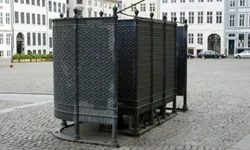
Nothing beats the feeling of a cold breeze when nature calls, but let’s be honest. This category is actually only for men. However, you should remain vigilant if you spot a public urinal nearby. These outdoor facilities are now appearing more and more often in different parts of Europe. Many are stylish and modern. Some of these are vintage classics worth looking for in major cities.
From a hygiene point of view, they have a clear purpose. They keep the streets clean. And drier. People use them often. Access to most is free. The trend doesn’t stop there. It spreads.
Take the installation in front of London’s Tate Modern. The artist designed a double-sided mirrored version. It turns a basic function into an interactive experience. Then there is Beijing. The city recently opened its largest outdoor toilet complex. It’s a hybrid space. It has Chinese urinals. Eastern squat toilets. Western-style sit-down toilets. All in one common space.
“Who says we don’t all get along?”
It’s a strange mix of cultures and amenities. One facility. Many styles.
Remote locations: Get off the grid
When you leave the city behind, the rules change. There is a shortage of toilets. Often not available. This is where planning comes into play. When traveling to remote areas, you need a strategy.
1. Know your options
- Portable toilets: Look for chemical toilets at trailheads or campsites. They are simple. But they work.
- Natural solutions: If there are no spaces, you have to dig a cathole. Go 6-8 inches deep. At least 200 feet from water sources.
- Leave No Trace: Pack out all toilet paper. Use a wag bag if necessary. In many environments, buried paper does not decompose quickly enough.
2. Necessary equipment
- Shovel: A small, light shovel is sufficient for digging.
- Hand sanitizer: Soap and water are rare in nature. Disinfectant is your best friend.
- Toilet paper: Bring biodegradable alternatives if possible. Or better yet, pack everything.
- Hand Trowel: For digging catholes in hard ground.
3. Safety first
- Wildlife: Be aware of your surroundings. Make noise when you are in bear territory.
- Privacy: Put up a blind when you are in a crowded area. A simple jacket attached to two branches works.
- Hygiene: Wash your hands thoroughly afterwards. Even with sanitizer. In remote areas, diseases spread easily.
4. Legal considerations
- Permits: Some parks require a permit for camping. Check in advance.
- Rules: Rules vary depending on the location. Follow local guidelines. They are there for a reason.
Going remote means accepting less comfort. But it also means more freedom. Plan ahead. Pack wisely. Respect the land. And always, always pack out what you pack in.
The wilderness doesn’t care about your comfort. But it deserves your respect.
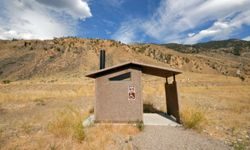
Some facilities are intended solely for hygiene purposes. Others exist because someone had to prevent people from leaving traces on the glacier. Then there are those that make you question your own gravity.
Take, for example, the stilt toilets in San Blas, Panama. Or the bamboo structures in Papua New Guinea. They look as if they would collapse under the weight of a single sneeze. They also make perfect sense. The tide comes in. The water will wash everything away. Problem solved without piping, wastewater treatment, or a drop of clean water.
Compare that to a porta-potty in the Swiss Alps. It looks ridiculous. A bright orange plastic box dangling over a drop that would make a skydiver check their parachute twice. It is practical, in a twisted way. It keeps the mountain clean. It just looks like a joke waiting to happen.
Australia holds the record for the world’s highest toilet. Not a metaphorical high. Literal, structural. And recently France was added to the list. Mont Blanc now has a toilet at the summit. The untouched mountain slopes were covered with “calling cards.” So they built a facility. For the faint of heart? No. For anyone afraid of heights? Absolutely not. These toilets don’t just challenge your bladder. They test your nerves.
On-board Toilets — Movements
Do you think a drop is a bad thing? Try moving at thirty thousand feet. Or fifty knots in a boat. Things are completely different with the toilets on the ships. They are not concerned about comfort. It’s all about containment.
Commercial aircraft use vacuum systems. No tanks. No pumps. Just suction. You pull the lever. The air pressure difference does its job. It’s fast. It is effective. It’s also loud. And you wonder where it all goes. It is pumped into a closed tank. Serviced on the ground. You’ll never see it. You hope you never think about it.
Boats are worse. Or better, depending on your tolerance for marine biology. Some boats dump overboard. Regulations are being tightened. Most modern ships use holding tanks. Marine heads. They stink. They require treatment. You need pumps. You are sitting on a bucket that travels with you. If the pump fails, you’re in trouble. If the tank fills up, you’re in trouble. If you find yourself in open water without a pump, you are in a very specific kind of trouble.
In the past, railway toilets used to just drop onto the tracks. A romantic idea. Now they are sealed. Vacuum systems again. Or chemical tanks. The chemistry is harsh. Blue dye. Biocides. You are sitting in a chemical bath. You hope the seal holds. You hope the valve works. You hope the next station has a pump truck at the next station.
Cruise ships are the ultimate test. Huge floating hotels. Thousands of people. Millions of gallons of waste. They have their own wastewater treatment plants. They meet strict environmental standards. They still smell. Sometimes. In the lower decks. Near the engine room. You live in a mobile waste management facility. You pay for the view. You ignore the plumbing.
How does the system work at sea when the boat rolls? The ventilation openings are unidirectional. Traps are designed to hold water. If the water dries out, the smell gets in. You need to flush regularly. Even if you don’t go. To keep
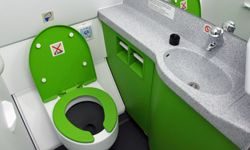
The Reality of On-the-Road Restrooms
You didn’t fly three thousand miles to waste your time in a hotel lobby, so let’s get practical about using the facilities while moving. Trains, buses, and planes usually have bathrooms, but the experience varies wildly depending on where you are and how modern the vehicle is.
In the air, it’s straightforward. Most commercial airplanes feature Western-style commodes mounted on the back wall. They don’t use water. They use vacuum pressure to clear the bowl, which means less mess but a louder, more aggressive flush than you’re used to at home.
Ground travel is messier, both literally and figuratively. Trains remain a staple of global transport, but the toilet you find on board reflects local habits. Travel through India or rural Thailand and you will likely encounter a squat toilet. Some are basic. Some offer an exhilarating, unobstructed view of the tracks flying by below. If you splurge for first class, the facilities might actually be nice.
Subways are different. You rarely find toilets on the trains themselves. You have to use the station facilities. Reviews of these stations are rarely glowing. In many parts of Europe and Asia, you’ll still have to pay a fee to enter, even if you’re just passing through. Plan ahead. Don’t get caught off guard.
Also, older trains sometimes skip onboard toilets entirely. Do your business before boarding a long haul.
Pig Toilets: A Unique Ecological Loop
Here is a fact that might stop you from ordering that bacon sandwich: pigs are part of the sanitation system in parts of Asia.
These are squat toilets with a chute that leads directly into a pen of hungry pigs. The logic is simple. It cuts down on wasted toilet tissue. It reduces water usage. It saves money on pig feed because the waste becomes fertilizer and fuel.
It is ecologically sound in principle. There is no messy cleanup for the humans involved.
Just keep that in mind while eating.
Finding the Facilities: A Global Phrasebook
Getting lost is stressful. Misunderstanding the sign for a restroom is worse. Here is a handy list of what locals actually call the bathroom in various regions.
- England and India: Look for “WC”
- Scotland and Ireland: “Loo”
- Germany: “Toilette” (pronounced toy-LET-ta)
- France: “Toilet” (pronounced twah-leh)
- India: Sometimes labeled “WV” (pronounced vee-cheeu)
- Italy: “Latrina”
- Spain: “Cervicio”
- Russia: “Toal-YET”
- Japan: “Ben-Jo”
Knowing the local term helps. It prevents you from standing confused in front of a door marked with a symbol you don’t recognize.
The Shelf Toilet: A Freudian Puzzle
Sigmund Freud once said a man should not try to eliminate his complexes but get into accord with them. He would likely appreciate the shelf toilet.
This fixture is common in Germany, Austria, Denmark, and the Netherlands. It features a tiny, dry porcelain shelf sitting just above the water line in the bowl.
Why does it exist?
The design doesn’t save water. It uses the same amount as a standard flush. The shelf serves no sanitary purpose. It exists for speculation. It allows you to pause. To consider the “complexities” of your elimination before hitting the flush.
It is a Western commode at its core. One firm flush will wash everything away. The shelf disappears under the water.
If you enjoy a thorough, perhaps overly intellectual, examination of the self, this toilet is for you.
For more on plumbing quirks and travel logistics, look to the next section.