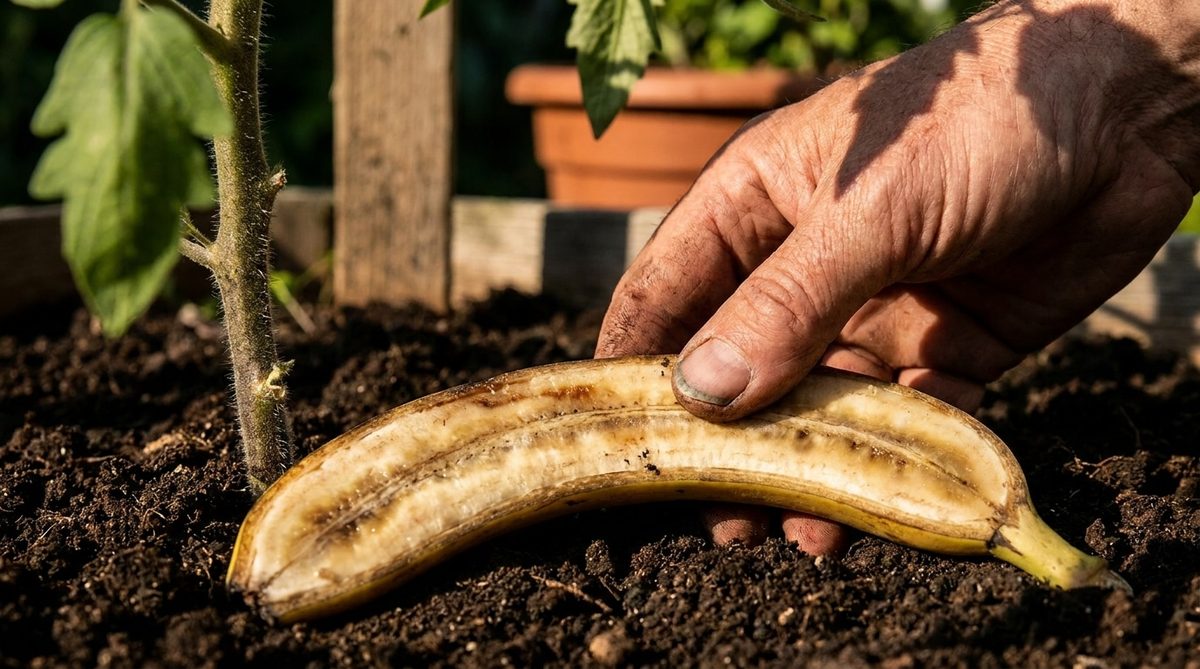
It’s midsummer. The tomatoes are turning color, green bleeding into red. You walk past a garden bed and see it: a slice of banana lying on the dirt. Just beneath the main stem.
Most people assume it’s for potassium. A free fertilizer boost to push growth. They are wrong.
This isn’t about feeding the plant. It’s about trapping the pests.
While big-box stores like Botanic or Jardiland are stacked with harsh chemical sprays, this method is a quiet, clever alternative. It works by using scent to distract the predators.
Why Bananas Work as a Natural Pest Trap
Late June brings heat and humidity. This combination wakes up the crawling and flying fauna that live to chew on your crops.
Slugs. Ants. Various flies. They are drawn to the sweet, juicy flesh of ripening tomatoes.
The banana slice acts as a sweet olfactory and gustatory lure. It is precise.
Instead of attacking your valuable vegetables, the pests swarm the banana. They concentrate their hunger on the sugary fruit. Your tomato clusters are left alone.
The pests leave the tomatoes for the easier, sweeter target.
How to Place Banana Traps for Maximum Effectiveness
This technique requires observation. You need to place it correctly for it to work.
Cut a ripe banana in half. Keep the peel intact. Place it face-down, cut-side against the soil.
Here is where most people fail.
You must replace this trap every two to three days.
Do not wait for it to rot. If organic matter sits too long, it invites fungal diseases. One night of neglect can ruin months of preventive effort.
A rotting banana becomes a breeding ground for mold, not just pests.
The Economic and Eco-Friendly Benefits
Using this integrated pest management strategy lets you skip expensive insecticide bombs. It preserves the balance of your urban garden oasis.
It is a pacifist approach. It protects the local ecosystem. Your harvest remains healthy and free of unwanted bites.
It also solves a kitchen problem. A banana that is too ripe to eat is a waste waiting to happen. This method gives it a second life as a protective barrier.
By rethinking food scraps, you create a redoubtable defense around your garden.
This curiosity observed among soft-farming growers proves one thing. Watching nature closely is the gardener’s best weapon.
Will you sacrifice a slice of fruit to save your salad tomatoes next summer?


