Traditional home offices are intended for multitasking. Reading and writing rooms are places of concentration. Whether you’re writing a novel, editing a manuscript, or just voraciously reading, you need a space that requires seclusion. The goal is more than just productivity. It is about serenity. It removes everyday clutter and creates a haven for serious work. Where to start? This is how you create the perfect studio for deep work.
Зміст
10: Silence is golden
Noise is the enemy of deep concentration. A busy street hits between 60 and 70 decibels. This is the volume of a small orchestra. It is deafening when I try to form sentences.
You need a room away from the clutter of your home. Look for a back room or an attic loft. These places are inherently quiet. They are far from streets and areas of heavy traffic. If the floor plan of your home doesn’t work, you have to engineer the silence. Install professional-grade wall insulation. Hang heavy curtains. Shut out the world until only your thoughts remain.
“Your goal is to minimize distractions. Choose a private room away from the street.”
9: Comfort is paramount
If you’re not careful, typing for hours on end can damage your back. Physical support is needed in the reading corner. You can’t sit on a hard wooden chair for four hours writing or reading a book. In order for your brain to function, your body needs to be relaxed.
Invest in an ergonomic chair. Look for lumbar support and adjustable height. This isn’t a place to squeeze into. It is a place to settle in. If you plan to read, add an ottoman or plush pillows. The environment should feel like a hug. The more comfortable your body is, the longer you will be in flow. You won’t be shifting around trying to find a position. You will just read. Or you can just write.
But comfort is not just furniture. It’s about the atmosphere. Next, consider lighting. Strong overhead lighting can strain the eyes. Warm directional lighting improves concentration.
You don’t need a clean, sterile cubicle to write the next great American novel. In fact, you might be better off without it. Of course, you also need a table. And you definitely need a chair that won’t hurt your back even after two hours. However, consider adding a seat or chunky armchair nearby. Much of the actual work takes place away from the keyboard: brainstorming, thorough research and transcribing half-baked ideas. You can’t write your way out of a plot hole.
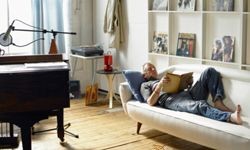
“Reading is best done curled up on a carpet rather than sitting at a table.”
This also applies to processes. If you feel stuck, move your body. Let’s change our perspective. Our goal is not productivity for the company. It’s flow.
8: Brighten your life
Media rooms thrive in the dark. Writer’s retreat requires the opposite. You need clean and even lighting. Natural light is the gold standard here.
If you are a morning person, point your space to the east. The morning sun brightens and energizes you, so it’s perfect for tackling your toughest tasks while your brain is fresh. If you’re a night owl who travels after sunset, look west. The lingering afternoon sun provides a long golden hour to push on.
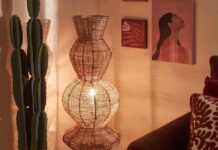
For the rest of us or for late-night meetings, artificial lighting becomes a necessity. Mood lighting with lamps is a great way to create atmosphere, but be careful. If the light is too dim or too warm, you can’t create ideas. You take a nap. You’re looking for clarity, not a lullaby.
Did you know?
“A Clean, Well-Lighted Place” is a short story written by Ernest Hemingway in 1933. The title says it all.
7: Eliminate distractions
This is where most people fail. They built the perfect room, bought the perfect chair and put the TV in it.
Disturbances are more than just noise. They are visually confusing. They’re the blinking cursor on a screen that isn’t for work. It’s like a buzzing cell phone in your pocket, sending unnecessary notifications.
Start by auditing your space. What do you see when you look up from your keyboard? A pile of laundry makes work stressful. If it’s a cluttered desk, you’re working in chaos. Clear it.
Next, work on digital tasks. Turn off notifications. Use an app to block social media while you type. Working from home blurs the line between ‘life’ and ‘work’. We have to build a wall. Not physically, but mentally.
“Remove distractions. All of them.”
It felt extreme at first. I miss the constant sounds of the outside world. You feel disconnected. But that’s the point. The story in your head creates a vacuum where only stories matter.
When the noise clears, you hear yourself thinking. That’s when good things happen.
Create a technology-free zone
The device must work properly in the real world. They don’t have to play a role in your creativity. Your phone, TV, radio, and Wi-Fi router share the same limited attention span. If you want to write or read, this competition is life or death.
The rules are simple. There is no telephone in the room. It stays in the other room. Inside the box. outside the house. If you can’t leave it alone, Mute the ringtone. But that’s a gamble too. The quiet vibration on a hard surface feels like phantom limbs.
Television has nothing to do with the writing sanctuary. This is passive consumption. It kills the momentum you’re trying to build. The Internet is a gray area. It’s a tool, but it’s also a trap. Open this page for one sentence of research, then close it after three hours to watch a video essay about the structural integrity of 19th century lighthouses.
If you need a network for research, connect it to the network. If necessary, use an Ethernet cable. Remove the wireless adapter. Turn off the router. Make physical distractions uncomfortable. Friction will save you.
Attention deficit disorder should be greater than attention deficit disorder.
Surrounded by source material
Here’s a psychological trick. You are what you put in your body. If the shelves are empty, your head is empty. If your bookshelf is full of heavy, difficult and beautiful literature, your brain is ready for this task.
Stock the shelves. The same cannot be said for self-help books and quick guides. With the classics. The book that makes you want to write in the first place. Having it close at hand can change the mood of a room. It shows seriousness.
It’s not just aesthetics. It is very practical. Before the Internet, writers didn’t have a search bar. They had card catalogs. Archive cards are arranged alphabetically by name and author. It’s very slow. This is a manual. It forces people to engage at a certain depth. You can’t just type in a keyword and scroll through results you don’t like. You had to browse. You had to look.
Digital libraries are convenient these days. But they have no historical weight. Whenever possible, use physical books as your primary research tool. Please look through them. The tactile experience slows you down. It makes you think.
Before starting your own work, reading a few pages of your favorite author’s works can increase your motivation. This frees up in-house editors and frees writers to speak freely.
Collect physical instruments
You cannot write with vague intentions. You need a kit. A dedicated set of tools for the writing space. When you sit down, everything should be within reach. No need to get up and look for a pen. No need to look for paper.
Using the right tools can reduce friction.
- Notebooks: Use whatever size and type you want. Use spiral binding for manuscript drafts. Hardbound for final thoughts. Moleskine for feeling like a detective. Just have them.
- Pen: Look for a pen that writes smoothly. If you’re using a cheap ballpoint pen, you’ll miss every third word, messing up your flow. Keep a spare. Ink runs out.
- ** Pencil and eraser:** When you want to make corrections
It is impossible to cook without a cutting board. That’s basic. And without physical tool support, you can’t expect to write or read efficiently. Of course, your computer is probably your primary device. However, keep paper on hand. Lots of it. Also a pen. You can also use a pen if you like graphite scratches.
Whatever you do, make sure you have enough inventory in your supply chain.
Many writers are superstitious. Weirdly so. Not being able to find your favorite pen isn’t just an inconvenience. It’s a reason to stop. It gives you a reason to get up, walk away and go to the store. That break? That’s the enemy of flow. You lose your motivation. You lose the thread.
Setting the Scene for Focus
This is a combination of decoration and functionality. It’s not just about the space looking beautiful. This is to eliminate friction. If you have to hunt for a pen, you’ve already lost.
Consider ergonomics and accessibility. Keep essentials close at hand. on a tray. Store it in a drawer that slides out easily. Don’t force yourself to get what you need for work.
Tool psychology
Why is a certain pen important? For some, it’s weight. balance. The click of the cap. These tactile feedback loops send signals to your brain that it’s time to pay attention. Without them, the mind wanders.
“Not finding your favorite pen can lead to the dreaded writer’s block or at least a reason to stop writing and go to the store.”
This is not just a superstition. This is a custom. This is a ritual. When rituals are disrupted, productivity suffers.
Organizational efficiency
Create a specified range. A specific drawer. certain shelves. Keep all writing instruments there. There are no exceptions. When you put them back, they go there. It’s readily available when you need it.
This also applies to paper. Notes. Loose leaf. Whatever your format is. Keep it visible. Keep it available. If you hide it, you forget it. Forget it, and you’ll stop.
Why physical tools are still important
In the digital world, analog tools can seem contradictory. But it offers something that the screen doesn’t. Tangibility. You can feel the paper. You can see that the ink is dry. It grounds you.
For deep work, this grounding helps. It separates the act of writing from the act of computing. It creates mental boundary. Physical space for thinking.
Don’t underestimate the power of a well-stocked desk. It’s not about clutter. It’s all about preparation. Be ready. Always.
Visual cues for creativity
Visual stimuli set the mood before you even write the words. If you are driven by relationships, shape your memories and hang them on your wall. Family photos are more than just decorations. they are anchors. They remind you who you are writing for. Quotations from authors you admire also work. You can motivate yourself quickly when your mind is blank.
Nature lovers need a different background. Hang pictures of lush forests or sunsets over the ocean. These images reduce stress. You can achieve mental relaxation without leaving your chair. The goal is immersion. We want the room to feel like a haven for introspection, not just a lit table.
3: Control the sound environment
Sound is the invisible builder of productivity. Music can start the creative engine. But it has to be the right type. Instrumental songs are usually the best. The lyrics compete with the words you want to write. You will find yourself subvocalizing them instead of concentrating on your story.
If you don’t like music, you might be interested in ambient noise. Abstract sounds like ocean waves and wind chimes provide a soothing background. They mask distracting household noises. But real life has its own soundtrack. If you live near the coast or in a well-ventilated area, open the windows. Let the natural rhythms of the environment fill the space.
Do you live in a concrete jungle? There is no need to sink into silence or the city sirens. A good audio device can fill this gap. Play creek noise, rainforest rain sounds, white noise and more. This consistent audio blanket helps many people get into a flow state faster. Set boundaries between “home space” and “work space”.
2: Create a child-free zone
A home office can be difficult when there are children involved. The biggest mistake parents make is to always be available. Freelance journalists and full-time writers often think of their home workspaces like a traditional office. This change in mindset is very important. During working hours, you are not at home in the sense that you are at home. You are “at work”.
Explain this to your child. Set clear expectations. You are unavailable unless it is an emergency. This does not mean to ignore them completely. Schedule specific breaks. Use this time to focus. Let them know when their turn comes.
Think of your reading and writing room as adult clubhouse. This is a space dedicated to deep work. Children must respect closed rooms. Without these boundaries, creative output suffers. You are constantly switching contexts. This fragmentation reduces productivity.
Spend your working day as if you were entering an office building.
Take Our Daughters to Work is a feminist initiative founded by Gloria Steinem in 1993. She noticed that girls were lagging behind in their career aspirations. In 2003, boys were added to the program to balance the narrative and encourage all children to envision a professional future.
1: No pets policy
Animals soothe the soul. They are also incredibly distracting. Cats walking on your keyboard are a writer’s nightmare. A dog begging for attention breaks your concentration. If you cannot work in the room with your pet, strict no-pet zone rules must be followed.
close the door. Use baby gates if necessary. Your pet may protest. they
Handling pet problems during renovation
Pets are unpredictable. They don’t apply for a license. They don’t care if the drywall is up or if the electrical box is live. If you have a low-energy dog. You get companionship. If you have an energetic cat, you get interference. The cat is sitting on the keyboard. The dog knocks over the tools. This is more than a nuisance. This is a safety risk.
A distracted worker make mistakes. Mistakes cost money. Furthermore, mistakes cause injury. Keep pets away from the work area. Use a baby gate. Close doors. If necessary, Lock them in a spare bedroom.
The Noise Factor
Demolition is loud. It’s not just noise. This is vibration. Loud noises can stress animals. Stressed animals start to run. A running animal gets underfoot. This leads to trips. If you trip, the power tool may fall. Falling power tools can cause serious injury.
Place your pet in a quiet room. Provide water. Give them a bed. Ignore the whining. Your safety depends on their silence.
Cleanliness and toxins
Home renovation dust is harmful to the lungs. It’s even worse for your lungs. Pets have a fast metabolism. They breathe more air per kilogram than humans. Lead dust. asbestos fibers. Silica from drywall. These particles stick to the coat. Pets take care of themselves. They ingest these toxins.
Wipe your pet’s paws clean before letting them out. Change their water bowl daily. Vacuum the bedding often. Keep them away from areas where you sand or cut. If you are removing an old floor, assume it contains lead or asbestos until it is tested. Don’t take risks.
Disturbance is dangerous
You are very focused. You cut the studs. You’re installing a wire. Your dog bumps your leg. The cat walks on a saw blade. This is not a joke. This is a common cause of workplace accidents.
Place your pet in a separate room. Not in the yard. It’s not a hallway. In another room. Lock the door. If you can’t see, you can’t intervene. They cannot demand attention. They can’t trip you.
When the project is postponed
If your pet is older or anxious, the renovation may be too much. They may not be able to cope with noise or the changes of daily life. Consider boarding them for the duration that of the most disruptive work. Very expensive. It’s cheaper than vet care.
Some pets can adapt. Some don’t. Get to know your pet. If they are anxious, give them a good start. Let them explore the safe zones first. Add noise slowly. Please turn on the radio. Turn on the TV. Mask the sound of construction.
This is not meant to be cruel. It’s about being responsible. You are building or improving a house. Your pet is a member of your family. Protect them from this process. Protect yourself from distractions.
Best Practices Overview
- Protection: Use physical barriers. Doors and gates are also simple. They work.
- Toxin Control: Wipe paws. Change the water. Vacuum the fur.
- Noise Control: Create a quiet haven. Use white noise.
- Supervision: Never leave a pet unsupervised in a work zone.
- Communication: Hire a sitter if your pet is highly reactive.