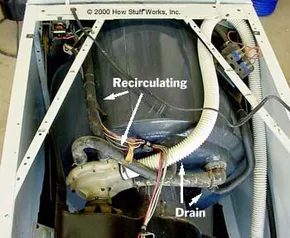
You might think of a washing machine pump as a simple bucket that can pump water. This is not true. The real magic happens in the pipe loops that recirculate water during the washing process and drains it during the spin. The pump is the heart of the system.
Let’s take a closer look at the settings. You see a dual-chamber design hidden in a single case. The bottom of the assembly is connected to the drain pipe. The top half feeds back into the wash tub. This physical separation allows the machine to do two completely different things with the same water source.
But how does the pump know which path to choose? It does not use complex sensors or electronic valves to change the flow direction. That would be too much. Instead, mechanical tricks are used. The motor driving the pump can be reversed.
When the washing machine is in the wash cycle, the motor spins one way. This forces the water from the tub back through the filter to the top of the pump and recirculates it. You need running water to wash your clothes.
When the spin cycle starts, the direction of the motor changes. Now the lower part of the pump takes over. Drain the water through the drain pipe into the vertical pipe. No extra valves. No complicated logic. Just physics.
This design is stylish for several reasons. Reduces the number of parts that are damaged. Seal leakage is reduced. And it can also reduce costs. Most standard top-loading washing machines do just that.
If you listen to the machine, you may hear a slight change in pitch as the pump reverses. That is the motor switching gears. This is a subtle hint that the cycle has moved from cleaning to drying.
Зміст
The Dual-Chamber Design
The pump is not a big bowl. Two different chambers are combined into one unit.
The upper chamber is the recirculation area. It is near the water supply. As the motor rotates forward, the chamber draws water from the tub. It pushes it through the agitator or impeller. The water is mixed. This removes dirt from the fabric.
The lower chamber is the drainage area. Connect directly to the drain hose. When the motor turns, this chamber becomes the active side. Push the water out of the machine.
This design means that there is no need for complex solenoid valves to change the flow. The direction of the motor determines the flow path. It’s a smart design. It saves space inside the cabinet. It also reduces potential points of failure.
The motor reverses the direction of rotation and the direction of flow
The key to this system is the engine’s ability to reverse. Most washing machine pumps use universal motors. These motors are cheap, efficient and can rotate in either direction.
When the control board sends a signal, the direction of rotation of the motor changes. This is a binary function. It’s either spinning left or right. There is no middle ground.
Why is this important?
This is because the vanes inside the pump are slanted. They push the water in the direction of rotation. Turn it in one direction and the water goes to the tub. If you turn it in the opposite direction, the water will go down the drain.
This is why you may hear a whirring or whining sound from the pump when you switch between cycles. The motor is physically reversing. It’s a mechanical shift. you
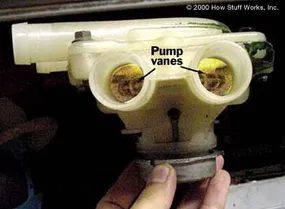

How the Pump Vanes Direct Water Flow
Look closely at the bottom layer of the pump. You will see the vanes clearly. These fins are the engine of the machine. When water enters the inlet, the vanes catch it. They push the fluid in a circle and force it out the outlet. The trick here is that this pump can operate in both directions. Which port is the inlet and which is the outlet depends entirely on which way the pump is spinning.
Clockwise vs. Counter-Clockwise Spin
Take another look at the pump setup. The direction of the spin changes everything.
If the pump spins clockwise, the bottom mechanism sucks water from the bottom of the wash tub. It forces that water out through the drain hose. Meanwhile, the top pump tries to suck air from the top of the wash tub. It attempts to force that air back down through the bottom. No recirculation happens. The water just leaves.
Spin the pump counter-clockwise, and the logic flips. The top pump sucks water from the bottom of the tub. It pumps that water back up to the top. The bottom pump tries to pull water from the drain hose back into the tub. There is usually a little bit of standing water in the drain hose, but the pump lacks the power to force much of it back into the wash tub. It’s a weak effort at best.
The Drain Hose Loop and Water Level
Why does the drain hose look like a giant hairpin bend in the picture? Notice how it loops all the way to the top of the machine before heading back down to the drain. This isn’t cosmetic. One end of the hose connects to the bottom of the tub. The other end is open to the atmosphere.
Because of this, the water level inside the drain hose stays the same as the level inside the tub. If the hose didn’t go all the way up to the top of the machine, the tub could never fill completely. The moment the water reaches the bend in the hose, it spills out the drain. The loop acts as a barrier. It holds the water in until the pump actively pushes it out.
When the Pump Stops Spinning
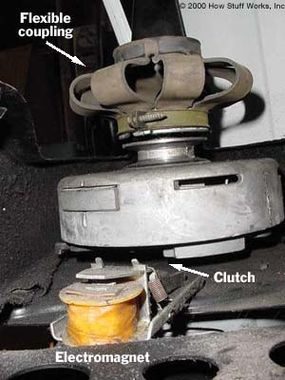
Sometimes the pump doesn’t spin at all. The washer just churns the water sitting in the tub. It agitates without recirculating. For this specific situation, the pump is hooked up to the motor by way of a clutch. The clutch disengages the pump from the motor’s rotation, allowing the tub to move independently of the water circulation system.

Why does the pump of my washing machine vibrate while spinning?
Look closely at the joints in the picture. You will see the flex coupler that connects the clutch and the pump. This particular part is more than just a connector. It solves mechanical conflicts. The motor and clutch are located on a moving frame. They ride with the inner tub. However, the pump is bolted to a stationary outer tub. If you hard-connected them, the shaft may be damaged due to vibration. The coupling absorbs misalignment and movement.
Once you get to the bottom of the clutch assembly, things get mechanical. Four Teeth are waiting there. The process is precise. When the electromagnet is activated, it does more than just power the drum. It raises an arm. That arm slots directly into those four teeth.
This engagement stops the teeth from rotating. It holds them in place.
When the rotation stops, the clutch is forcibly engaged. It takes several rounds for the system to catch on. It is then locked onto the motor shaft. Finally, the pump starts rotating together with the motor.
The coupling exists because one part moves and the other remains stationary. Hard links break under this pressure.
You may be wondering why the arm needs to lock the teeth before the pump rotates. It prevents slipping. Without this lock, the clutch would just spin uselessly. The pump stays put. The machine does not drain or spin properly.
Check your teeth. Not worn. The arm seats firmly. This way, the washing machine transfers the power from the motor to the pump without damaging the frame.


