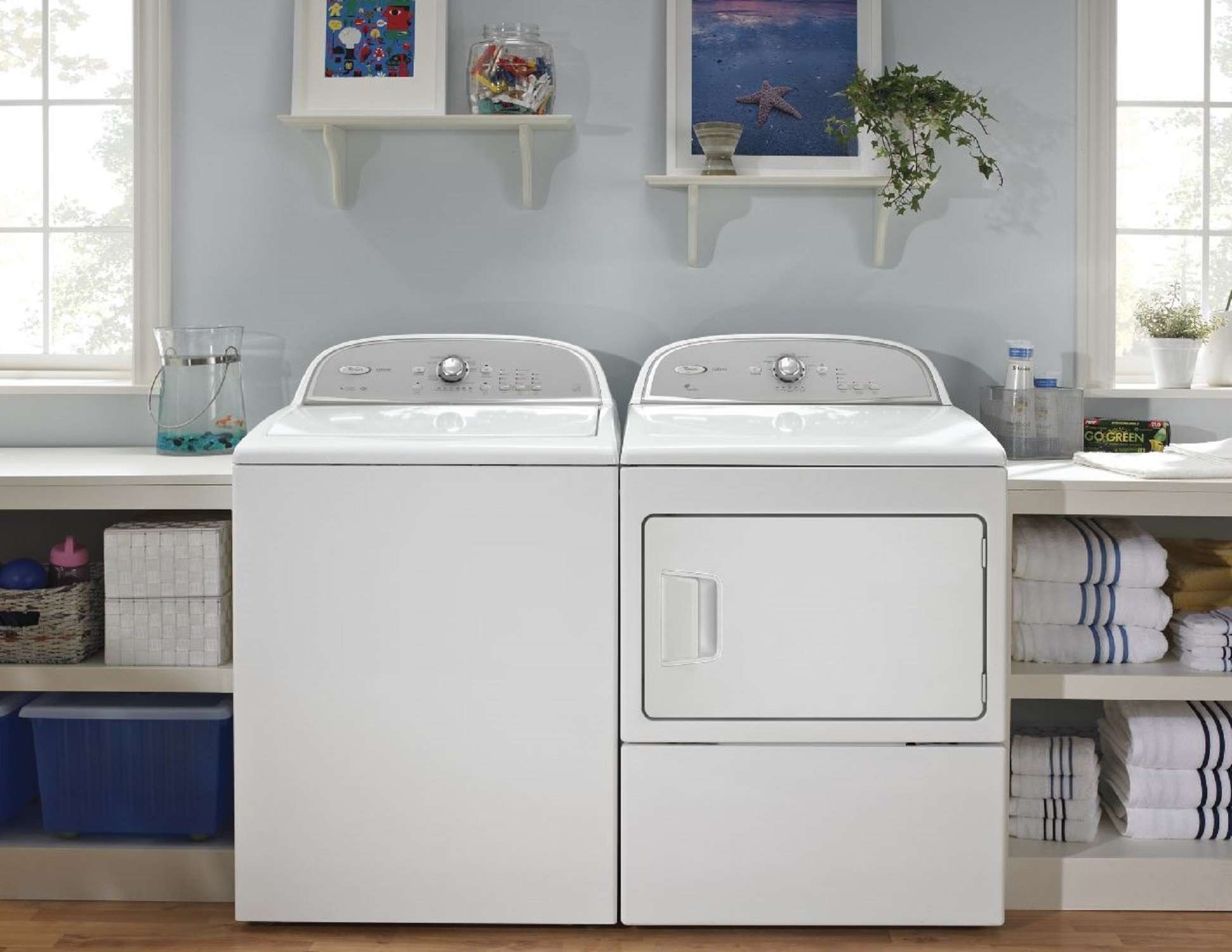
Your Whirlpool Cabrio washer just flashed an error code. Panic? Not yet. Most of these aren’t catastrophic failures. They’re often just annoyances you can fix with a wrench or a quick reset. But you need to know which code means “check the hose” and which means “replace the board.”
We’re going through the full list. From LF to F54, we’ll tell you what’s wrong, why it happened, and exactly what to do about it. Let’s get that spin cycle back on track.
Зміст
Water Issues: LF and uL
First up, LF (Long Fill). The screen flashes LF when the water level doesn’t rise as expected. It’s the washer’s way of saying, “Hey, I told the valves to open, but the tub is still dry.”
Why does this happen?
* No water pressure. Check the shut-off valves. Are they actually open?
* Clogged inlet screens. Unscrew the hoses from the back of the machine. Inside the valve ports, there are tiny mesh screens. Lint, sediment, or mineral deposits love to live there. Clean them out.
* Pressure hose issues. If water is getting in but the washer doesn’t detect it, the air hose connected to the pressure switch might be loose, kinked, or clogged with debris.
Then there’s uL (Unbalanced Load). This isn’t an error code per se. It’s a status message. The sensors detected an off-balance load. The washer will run a mini-cycle, trying to redistribute the laundry by pulsing the drum. If it succeeds, the message vanishes. If it fails? It flashes until you open the lid and spread the clothes out manually. Usually, it’s just a heavy towel bunching up with jeans. Rearrange. Restart.
Draining and Overload Issues: Ld and oL
Ld (Long Drain) follows the same logic as LF. The pump is running, but the water level isn’t dropping. Common culprits:
* Clogged drain hose. Check the kink. Check the trap.
* Pump obstruction. Small objects (coins, socks, buttons) love to get stuck in the pump impeller. You may need to access the pump behind the kickplate to clear it.
* Height issue. The drain hose needs to be installed at a specific height. If it’s siphoning water out too quickly or not pumping effectively, ensure the standpipe height is correct (generally above 96 inches for proper air gap, though local codes vary).
oL (Overloaded) means you threw the kitchen sink at it. The sensors detect a load that exceeds capacity. It won’t fill properly or spin efficiently. Open the lid. Remove items. Restart. Simple.
Suds, Lid, and Safety: Sd, lid, and Po
Sd (Suds Detection). Too much foam? The washer analyzes the drag on the basket. If it feels like it’s churning butter instead of water, it triggers an suds-lock. It will run a mini clean-out cycle to blow off the suds. If that doesn’t fix it, the cycle ends with Sd flashing. Did you use HE detergent? Did you use too much detergent? Or is the drive mechanism slipping, preventing the basket from agitating properly to break the suds? Check your detergent usage.
lid (Open/Close Door). This flashes if you press START with the door open. Obvious. It also appears if you start two cycles in a row without opening the door. Some models lock out the keypad after repeated rapid starts. Open the door. Close it firmly. Try again.
Po (Pump Out). You left the door open for more than 10 minutes? The washer assumes you gave up. It starts pumping out the water automatically. Close the door to stop it. It’s a feature, not a bug, preventing overflow.
Temperature and Lock Failures: HC, dL, dU
HC (Hot, Cold Reversed). If your clothes come out cold even when you select hot, the inlet hoses are swapped. Hot goes to the cold valve, cold goes to the hot. They won’t damage the washer, but they’ll ruin your wash. Swap them back.
The door lock issues are more annoying. dL (Door Lock Failure) and dU (Door Unlock Failure).
- dL: The latch tries to engage but fails. Check for interference. Is a piece of clothing wedged in the door seal? Lint buildup can also block the lock bolt. If the switch doesn’t signal closure, you get dL.
- dU: The latch is engaged but refuses to release. Excessive force during the cycle, or wash residue gumming up the mechanism, can cause this. If the control can’t detect an unlock, it flashes dU.
Try cleaning the latch area with vinegar or a degreaser. Sometimes the issue is mechanical friction rather than electrical.
Electronic and Control Failures: The F-Codes
These are the ones that make people sigh. The main control board or sensors are failing. But before you buy a new board, check the simple stuff.
- F1 (Primary Control Failure). Check the pressure hose for pinches or tears. A loose connection here looks like a control board failure. If the hose is fine, the main control likely needs replacement.
- F2 (Keypad/User Interface). Stuck key. Press all the buttons to see if one feels mushy. Moisture can cause shorting. Let the control panel dry out. If it’s stuck in diagnostics, a hard reset (unplug for 5 minutes) might clear it.
- F40/F41/F42 (Thermistors). F40 is the tub temperature sensor. F41 is the motor rotor sensor. F42 is the heater thermistor. If the main control can’t read resistance, it flags an open/short circuit. Check the wiring harness for damage. If wires look good, replace the respective sensor.
- F50-F54 (Motor Issues). These are serious.
- F50 (Motor Stalled). The rotor isn’t turning. Check the drive belt (if applicable) or direct drive coupling. Ensure the basket spins freely by hand.
- F51 (Motor RPS Failure). The sensor that tells the board where the rotor is, failed. Replace the rotor position sensor or the motor.
- F52 (Motor Stop Failure). The motor is still spinning after being told to stop. Mechanical friction or a faulty sensor.
- F53 (Overtemp). The motor module got too hot. Usually due to mechanical resistance. Check for friction.
- F54 (Overcurrent). Too much power draw. Check the wiring on the P5 and P10 connectors. If the wiring is solid, the motor control board is likely toast.
The Bottom Line
Most Whirlpool Cabrio errors are diagnostic, not terminal. LF, Ld, and uL are almost always user-correctable. The door locks (dL/dU) are frequently jammed by debris. The F-codes are where things get expensive, but always verify the wiring and simple connections before replacing a $200 main board.
Start with the basics. Check the hoses. Clean the filters. Clear the drains. If the code persists after the simple fixes, then you dive into the electronics. Don’t panic. Just proceed.


