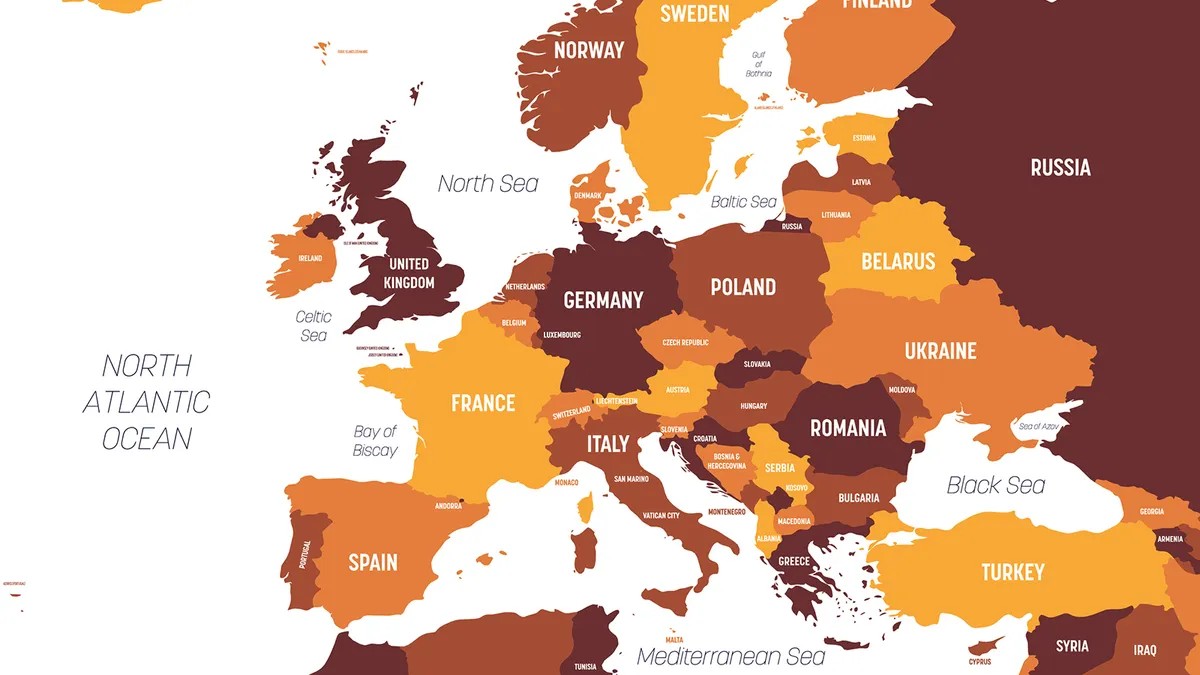
Italy’s geographic position is more than just a point on a map; it is a defining factor in how the nation interacts with the rest of the world. Situated in Southern Europe, the Italian Peninsula extends deep into the Mediterranean Sea, acting as a bridge between Western Europe, Central Europe, and North Africa. This strategic “crossroads” status has historically turned Italy into a hub for trade, migration, and cultural exchange.
The Land Borders: Alpine Peaks and Economic Corridors
Italy shares terrestrial boundaries with four nations and contains two sovereign enclaves. The nature of these borders varies from rugged mountain ranges to dense urban connections.
Switzerland: The Alpine Connection
Switzerland shares Italy’s longest land border, characterized by the dramatic, high-altitude terrain of the Alps. This border is defined by iconic landmarks such as the peaks near Monte Bianco (Mont Blanc).
Beyond the scenery, this border is a vital economic artery. The connection between Northern Italy—specifically the fertile Po Valley —and Swiss urban centers creates one of Europe’s most integrated cross-border economic zones. This relationship has remained remarkably stable since the end of World War II, facilitating seamless trade and movement.
France: A Shared Western Frontier
To the west, Italy borders France. While the modern boundary was formalized in 1947 following the conclusion of World War II, the two nations have shared deep historical and cultural ties for centuries. The border is shaped by shared Alpine geography, linking major Italian hubs like Turin to French territory through established trade routes and cultural exchange.
Sovereign Enclaves: Cities Within a State
One of Italy’s most unique geopolitical features is the presence of two independent nations located entirely within its borders. These enclaves represent a fascinating intersection of modern sovereignty and ancient history.
Vatican City: The Spiritual Epicenter
Located within the city of Rome, Vatican City is the smallest sovereign state in the world. Spanning only about 3.2 kilometers (2.0 miles), its tiny physical footprint belies its massive global influence. As the administrative and spiritual center of the Catholic Church, it remains a unique political entity that operates independently of the surrounding Italian state.
Maritime Influence and the Mediterranean Context
While land borders define much of Italy’s immediate neighbors, its maritime borders are equally significant. By bordering numerous nations across the Adriatic Sea and the wider Mediterranean, Italy maintains a strategic presence in one of the world’s most important maritime corridors. This connectivity has historically allowed Italy to act as a gateway for goods and ideas moving between the European continent and the African and Middle Eastern coasts.
Summary: Italy’s unique geography—defined by Alpine borders with Switzerland and France, the presence of the Vatican enclave, and its central Mediterranean position—has made it a permanent fixture in the economic and political evolution of Europe.