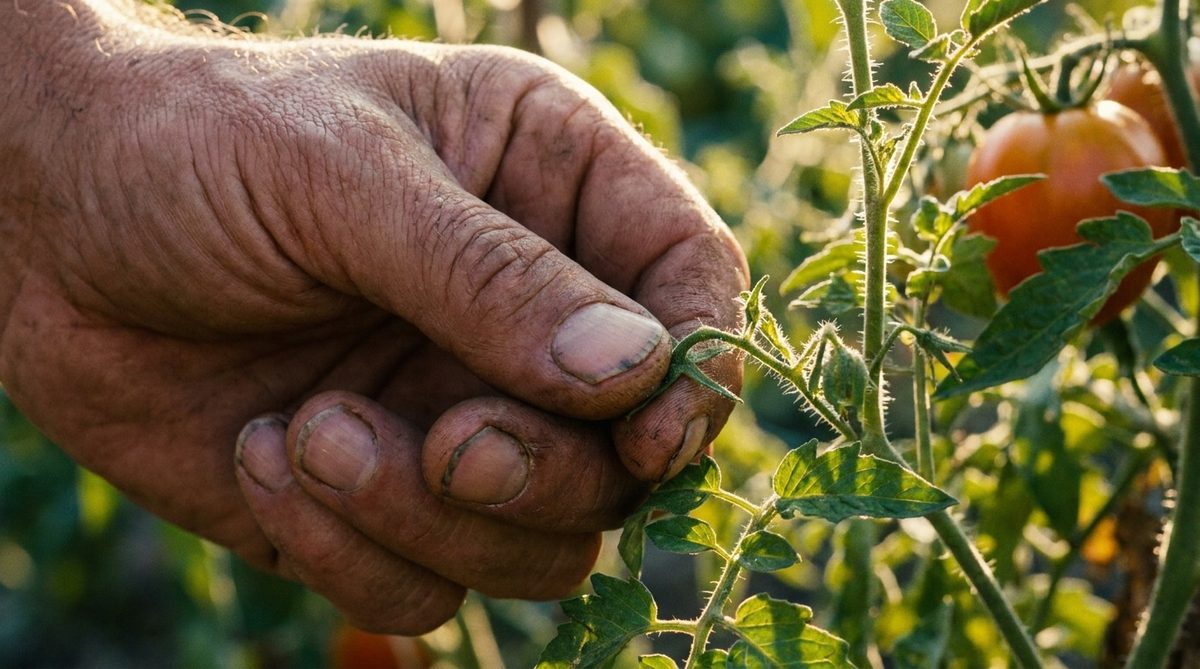
June is ending, and if you have a garden, you probably know the feeling. The plants are moving fast. Leaves are climbing. Stems are reaching for the summer sky. It is tempting to rush out at dawn. The air is cool. The light is soft. You want to pinch those young shoots before they get out of hand.
Don’t do it.
There is a specific window for pruning tomato plants. Miss it, and you might lose your crop to disease. The mistake most gardeners make is thinking early morning is the best time. It’s actually the worst.
Зміст
Moisture is the Enemy
Tomatoes are sensitive. They are juicy plants. When you cut a stem, you create an open wound. This wound exposes the plant’s internal sap to the outside world. If you do this in the morning, you are inviting disaster.
Why? The dew.
Even if it isn’t raining, there is moisture in the air. Water beads on the leaves. It sits on the cut stem. This creates a humid micro-environment right at the injury site. Fungi love this. Specifically, Phytophthora infestans, the pathogen responsible for late blight, thrives in wet conditions.
Blight is not just a minor issue. It is a destructive force. It can turn healthy green leaves into brown, mushy necrosis in a matter of days. Once the spores enter the wound through the moisture, the infection spreads rapidly. The plant cannot recover. The fruit rots. The season is over.
By pruning in the morning, you are essentially handing the disease a key to your garden. You are keeping the wound wet for hours while the sun rises and the humidity lingers. That is not a strategy for growth. It is a strategy for loss.
The Golden Rule: Late Afternoon
So, when should you prune?
Wait until the late afternoon. This is not a suggestion. It is a requirement for a healthy harvest.
You need a specific set of conditions. The sun should be lower in the sky. The heat should be dropping slightly, but the key factor is dryness. The air needs to be dry. The leaves should be free of dew.
Pruning in the late afternoon allows the cut stem to dry quickly. A dry wound closes faster. It blocks pathogens before they can establish themselves.
Here is the mechanism:
- Sunlight: As the day progresses, the UV radiation and warmth help evaporate surface moisture.
- Dry Air: In the late afternoon, especially if the humidity has dropped from the morning dew, the air is drier.
- Time: You are giving the plant the rest of the evening to heal before the night’s humidity returns.
If you cut in the evening, the plant has hours of darkness and cooling temperatures to seal the wound. If you cut in the morning, the moisture stays. Fungi move in. You lose.
The Weekly Routine
This isn’t a one-time event. It’s a rhythm.
Tomato plants are vigorous. They produce “suckers” – secondary shoots that grow in the junction between the main stem and a branch. These suckers steal energy. They take resources away from the fruit. If you ignore them, you get a huge bush with few tomatoes. If you manage them, you get fruit.
Do this once a week.
The Process:
- Tools: Use clean, sharp scissors or pruning snips. Dull tools crush the stem. Crushed stems heal slower. Slower healing means more risk.
- Technique: Pinch or snip the suckers. Remove them close to the main stem, but do not tear the bark. A clean cut is essential.
- Timing: Check your plants in the late afternoon. Look for new growth. Remove only what is necessary.
Watch the sky. If it’s cloudy or humid in the late afternoon, wait. If rain is forecast for the evening, wait. You want the cut to dry. You want the air to be still and dry.
Why This Matters for DIY Gardeners
You might think you have a “green thumb” because your plants are tall. Height is not health. A tall plant with blight is a dead plant.
This advice is about prevention. It is about understanding the biology of the plant. Tomatoes are not just decorative. They are food sources. They require respect for their vulnerabilities.
The soil matters. The sun matters. But the timing of your intervention matters most when it comes to disease control.
What Else Can Go Wrong?
You might ask, what about the rest of the garden? What about other crops?
Tomatoes are just one part of the puzzle. Squash has its own pests. Herbs have their own pruning needs. But the principle remains: moisture management is key to plant health.
If you start seeing yellow leaves, check for blight. If the fruit is rotting at the bottom, that’s blossom end rot, which is a calcium issue, not a pruning issue. But if the leaves are turning brown and crispy, look at your pruning habits. Look at the time of day.
The season is short. The heat is on. The plants are working hard. Give them the best chance.
Cut in the dry air. Cut in the


