January is here. The holidays are over. Your washer is working overtime.
Laying out the heavy wool sweaters, thick pants, and accumulated bedding feels like a logistical nightmare. You load up the machine. You press start. You expect clean clothes.
What you get is a tangled mess.
It happens every time. Sleeves wrap around pant legs. Sheets ball up into dense knots. Water and detergent can’t reach the center of that textile lump. The result? Poor cleaning. Frustration. A lot of pulling and tugging before you can hang anything.
There is a fix. It sounds ridiculous.
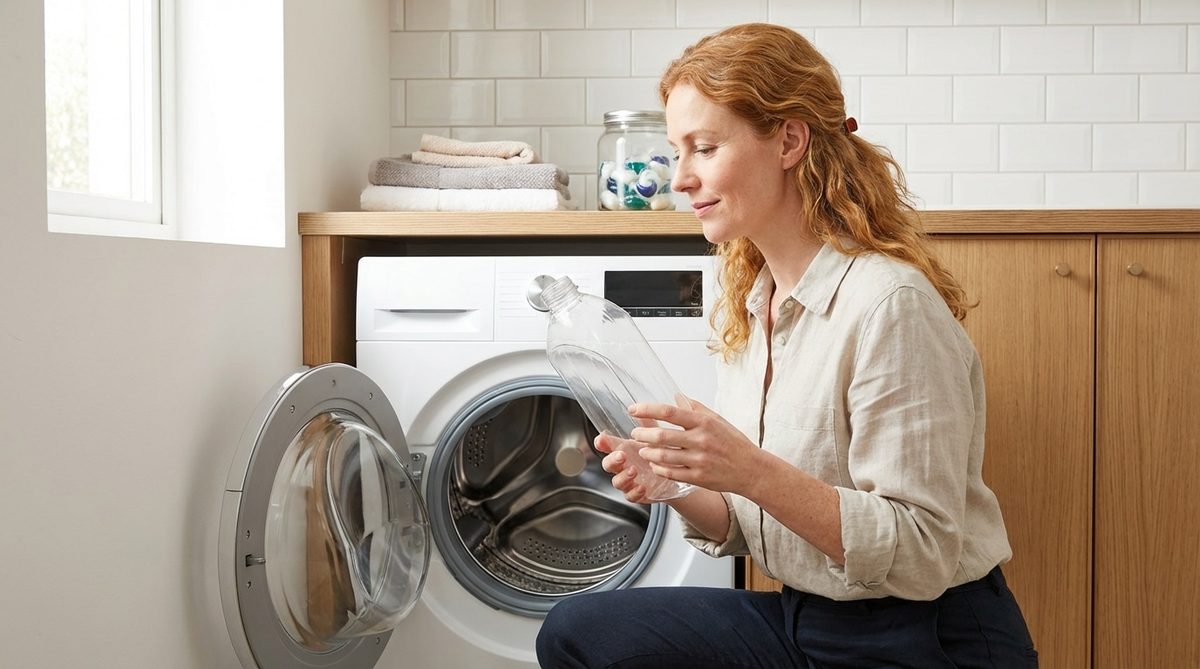
Grab an empty plastic bottle. Toss it in with your load.
Yes, really.
Зміст
Why Your Laundry Gets Tangled in the First Place
Before you dismiss this as a gimmick, you have to understand the mechanics. Your washer drum rotates. Clothes tumble. Friction occurs.
When bulky items like duvet covers or jeans are washed alone, they don’t just float. They clump. They find each other and latch on.
“Adding an empty plastic bottle to the drum prevents clothes from tangling by acting as a dynamic physical separator.”
The bottle doesn’t wash your clothes. It occupies space. It moves.
As the drum spins, the bottle tumbles randomly. It bounces off the glass door. It hits the wet fabric. It disrupts the flow.
Think of it as a chaotic spacer.
Instead of a single mass of tangled cotton and denim, you get individual pieces separated by hard, rolling plastic. The bottle forces the textiles apart. It keeps them moving independently.
How an Empty Bottle Improves Wash Efficiency
This isn’t just about untangling clothes later. It’s about cleaning them better now.
When fabrics clump, water circulation stops. Detergent pools on the surface but doesn’t penetrate the core. Socks get buried under a comforter. They come out half-dry and unclean.
The bottle changes the physics of the wash cycle.
By creating constant agitation points, it ensures every item gets exposed to the soapy water. No more hidden pockets of dry fabric. No more trapped dirt in the center of a sheet bundle.
Each garment gets the space it needs to be brushed properly. The water flows through the load, not around it.
This is a zero-cost upgrade to your laundry routine.
You don’t need expensive balls. You don’t need special accessories. You just need something empty and rigid.
A 1-liter soda bottle. A 2-liter water jug. Even a cleaned-out bleach container (rinse it thoroughly).
Empty them. Remove the caps (or leave them on loosely so air can escape, though many leave them on tight—both work, but loose caps allow for slight crushing if pressure builds, though typically hard plastic holds shape). Actually, for safety and longevity, ensure the bottle is clean and free of sharp edges.
The Practical Benefits Beyond Untangling
Let’s talk time.
How much time do you spend pulling jeans off sheets? How many times have you ripped a seam because you pulled too hard at separation?
The bottle prevents the initial knot. You pull out the clothes. They are separate. You hang them. You move on.
It is a small gain. But those gains add up.
Plus, there is a subtle benefit to fabric care. Constant, heavy twisting can damage fibers over time. By reducing the severity of the tangles, you might extend the life of your delicate items. The bottle absorbs some of the impact, acting as a buffer between hard seams and soft knits.
Is it magic? No.
Is it effective? Yes.
It relies on simple mechanical displacement. The bottle takes up volume that the clothes would otherwise use to grab onto each other. It breaks the pattern of entanglement.
Which Bottles Work Best?
Not all plastics are created equal.
- Hard Plastic: Soda bottles (PET) are ideal. They are rigid. They hold their shape under pressure. They bounce well.
- Thin Plastic: Water bottles can sometimes crumple or create noise. They work, but hard PET is superior.
- Size Matters: A 500ml bottle might be too small to make a significant difference in a full load. A 1.5L or 2L bottle provides more volume displacement. It pushes more fabric away.
Don’t use glass. It breaks. It’s dangerous.
Don’t use containers with residual chemicals. Rinse them out. A faint smell of detergent or old juice is annoying when
How plastic bottles improve laundry performance
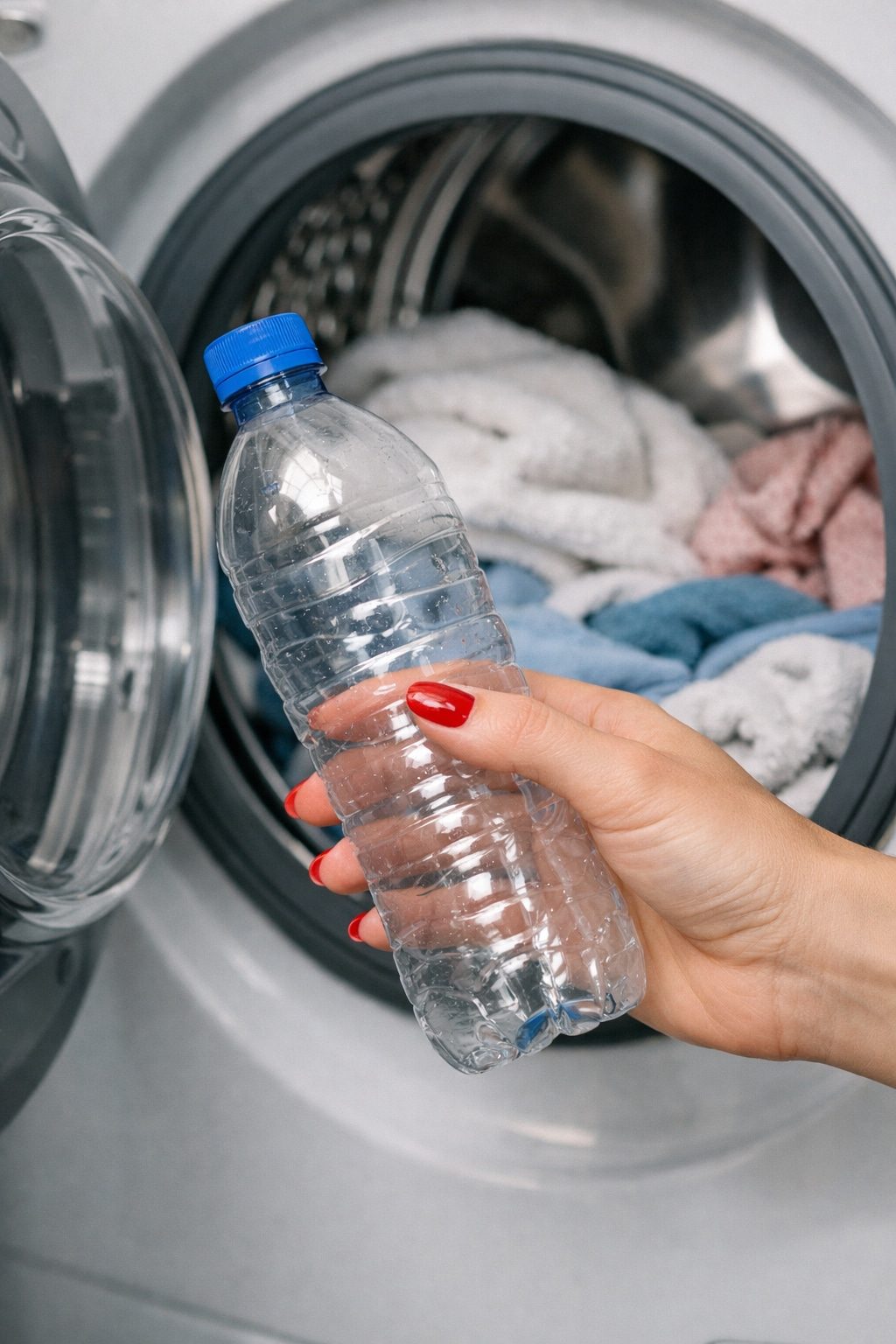
The trick isn’t just about untangling socks. It transforms your washing machine’s efficiency. Empty plastic bottles inside the drum create turbulence. This mimics the action of old-fashioned washing boards but with zero abrasion. The result? Improved laundry agitation that lifts grime from deep within fibers faster than drum rotation alone.
You need to prepare the bottles correctly to avoid damaging your machine. Start with two sturdy plastic bottles. Soda bottles work best because they are thick. Thin milk jugs might warp under the heat of a hot wash.
Here is the protocol:
- Clean thoroughly. Remove all sticky residue. Sugar attracts dirt.
- Remove labels. Paper tags can tear off and clog your machine’s filter.
- Seal tightly. Screw the caps on as hard as possible.
- Add weight (optional). Pour a little water or sand into the bottom. This adds stability during the spin cycle.
Place them in the center of the load. Do not overload the machine. The bottles need room to tumble.
Reduce detergent用量 and rinse better
This mechanical action changes how you use chemicals. Because the water circulates with more force, you can reduce laundry detergent dosage. The bottles act as giant wash balls. They help disperse surfactants more effectively.
There is a clear ecological benefit here. Less detergent means fewer chemicals entering the wastewater system. You also save money on groceries.
The rinsing phase improves significantly. Residual detergent irritates skin. Winter skin is particularly vulnerable. The turbulence washes away soap suds more completely. You get perfectly rinsed and clean clothes without needing an extra rinse cycle. That saves water too.
Extend the life of your favorite clothes
It seems counterintuitive. Hard plastic against soft fabric?
Actually, this method prevents clumping. When clothes ball up, they rub against each other aggressively. This causes pilling and premature wear. The bottle acts as a spacer. It keeps fabrics separated.
The smooth PET plastic is gentler than a zipper. Think about it. A metal zipper grinding against a wool sweater is a nightmare. A plastic bottle rolling around that same sweater is harmless.
The motion also acts as a natural fabric softener. The constant tumbling massages the fibers. Clothes come out softer. Less stiff. Often less wrinkled. It is a great alternative to chemical softeners. Those products are full of allergens. They coat fabrics in unnecessary chemicals. Your towels regain their fluffiness naturally.
When to avoid this hack
Common sense still applies. This works for cottons, synthetics, and jeans.
Do not use this method for delicates. Silk? No. Fine lace? No. Nylon hosiery? Absolutely not. The bottle cap might have a rough edge. It could snag delicate threads. If the item is fragile, leave the bottles out.
For everyday loads, the technique enhances cleaning power. It also extends garment life by preventing friction damage. You are turning trash into a tool. It is pragmatic. It is clever.
So next time you load the machine for a winter wash, try it. See if your clothes feel different.