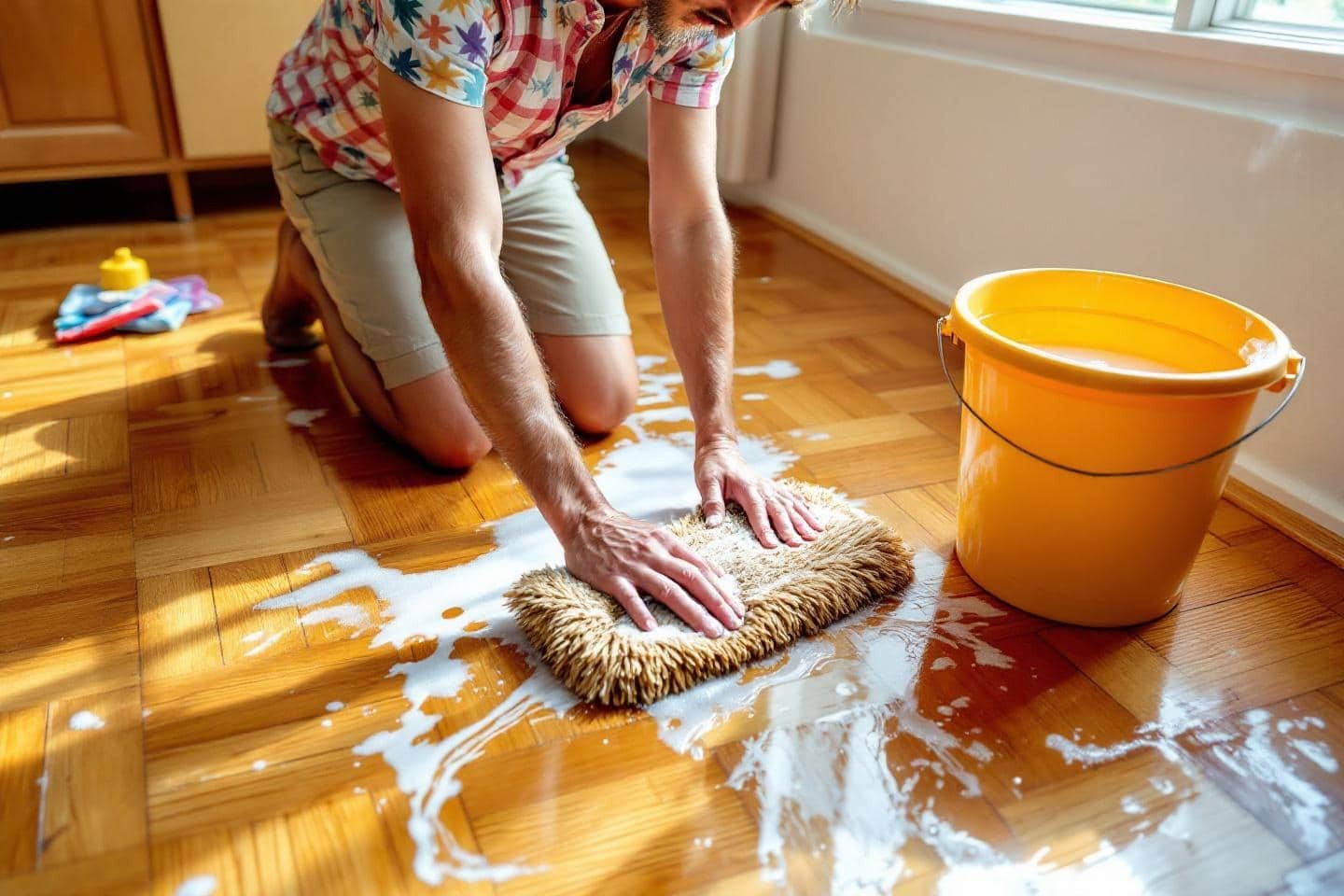
We’ve all seen DIYers online flexing their ability to make hardwood floors look like they just came off the showroom floor. It became a sport. But there is one old-school habit that makes true wood enthusiasts cringe. You know the one. A large bucket of soapy water. The hot mop. The philosophy is “the more water, the cleaner it is”.
This is wrong. And it’s destructive.
If you don’t want your floors to tired or warp, you need to stop treating them like tiles. Let’s take a look at why this common cleaning mistake can actually ruin your investment.
Зміст
Floor damaged by water
Many homeowners still believe that scrubbing with a soaking wet mop is the only way to really clean your floors. This habit dates back to the days of stone and tiles that could withstand floods. Wood is different. It’s not stone. It’s organic.
Using large amounts of water, especially hot water, can fast track to damage. You may not see the problem today. However, the damage is done beneath the surface.
Why wood hates excessive moisture
Look at your old buckled floorboards. This happens when the wood is too wet. Solid wood and engineered wood are like sponges. They soak up moisture. Then, as they dry, they shrink. as it dries.
This cycle causes warping. It causes dark stains. It creates gaps between the boards.
In older homes, especially in places like Paris where historic apartments are common, this type of damage is rampant. Depending on the type of wood, excessive moisture can cause the board to swell by up to 1 centimeter per meter of width. That’s significant. It usually happens within just a few weeks.
When this happens, the damage is usually irreversible. You might have to entire sections of your floor may need to be replaced. It’s expensive. That’s a hassle.
Heat Opens the Pores
Hot water is also your enemy. Use boiling water to cuts grease from tiles. On wood, this is a disaster.
The heat causes the wood to expand. The pores on the surface open. Therefore, wood absorbs moisture and stains more easily. It’s a double whammy.
Repeated thermal changes in temperature, such as using a mop that is too hot, can cause the surface to deteriorate faster. Whether it’s varnish or oil, heat will break it down.
Light woods and exotic species are particularly sensitive. Heat can change the color of the floor. It can leave whitish marks. If you have recently oiled or waxed your floor, will dull the finish quickly if you use hot water. You think you’re helping. In fact, it accelerating the deterioration.
Smart Moves for Better Care
So what do you do instead? A gentler approach is needed. The goal is not to strip the floor. It’s to clean without stressing on the material.
- **Use a damp mop, not a wet mop. ** Wring the mop until it is barely wet. It should leave the floor dry almost immediately.
- **Use a pH-neutral cleaner. ** Avoid strong chemicals. Look for a cleaner designed specifically for wood floors.
- Wipe up spills immediately. ** Wood moisture is your enemy. Wipe clean. Do not soak.
Use a microfiber cloth. ** Does not require much moisture to trap dust and stains.
The key is moderation. Drink less water. It has less calories. be careful. The floor lasts longer. It also looks better. And you don’t have to worry about injuries happening quietly under your feet.
Avoid getting the floor wet. The old fashioned “soak mop” method is disastrous. It warps planks. It ruins the finish. If you want hardwood to last, you need to treat it carefully.
Cleaning is not scrubbing. It’s all about preservation. You have to respect the material of the material. This means minimal moisture. This means gentle tools.
The right way to mop hardwood
The secret is moderation. Wood hates standing water. A dry or slightly damp microfiber mop removes daily dust and light dirt.
If using liquid, squeeze it until it is almost wet. We’re talking about drops, not streams.
For deep cleaning, mix water and mild detergent. Never use hot water. Warm water is fine.
- 1 liter of warm water (not hot)
- 1 tablespoon of liquid black soap
- A well-wrung microfiber mop head
Black soap is a tradition for a reason. It cleans without stripping the wood of its natural oils. You can also use a spray made especially for wood. Spray on the fabric, not the floor. This technique protects the grain. It prevents swelling and gives the floor a natural look.
Avoid using multiple surface cleaners. Avoid strong degreasers. When it comes to wood, simple is better.
Protects against stains and scratches
Cleaning is only half the battle. Protection is more important.
Let’s start with the entrance. Put doormats everywhere. They collect sand and gravel. It causes scratches.
Use carpets in high traffic areas. Use felt pads under furniture legs. This stops dents and scratches caused by moving chairs.
If something spills, wipe it up immediately. Use a soft cloth. Then wipe the area with a damp microfiber cloth. Do not let the liquid sit. Even if the water stands for a few minutes, dark spots or warping may occur.
Feed the wood once or twice a year. Use a compatible wax or oil. This keeps the color rich. It highlights the grain.
Ventilate the room regularly. Old, humid air can damage the wood. It changes color. It promotes mold. Open windows. Circulate the air.
Why simplicity wins
Traditional methods using excess water or heat are outdated. They can cause irreversible damage.
Modern treatment is different. It’s all about consistency.
Use a damp mop only. Clean gently. Prevent accidents before they happen.
This approach provides a balance between ease of use and preservation. You can get clean floors without the risk of ruining your investment.
Your hardwood deserves a long life. Give it the care it really needs, not the care you think it wants.


