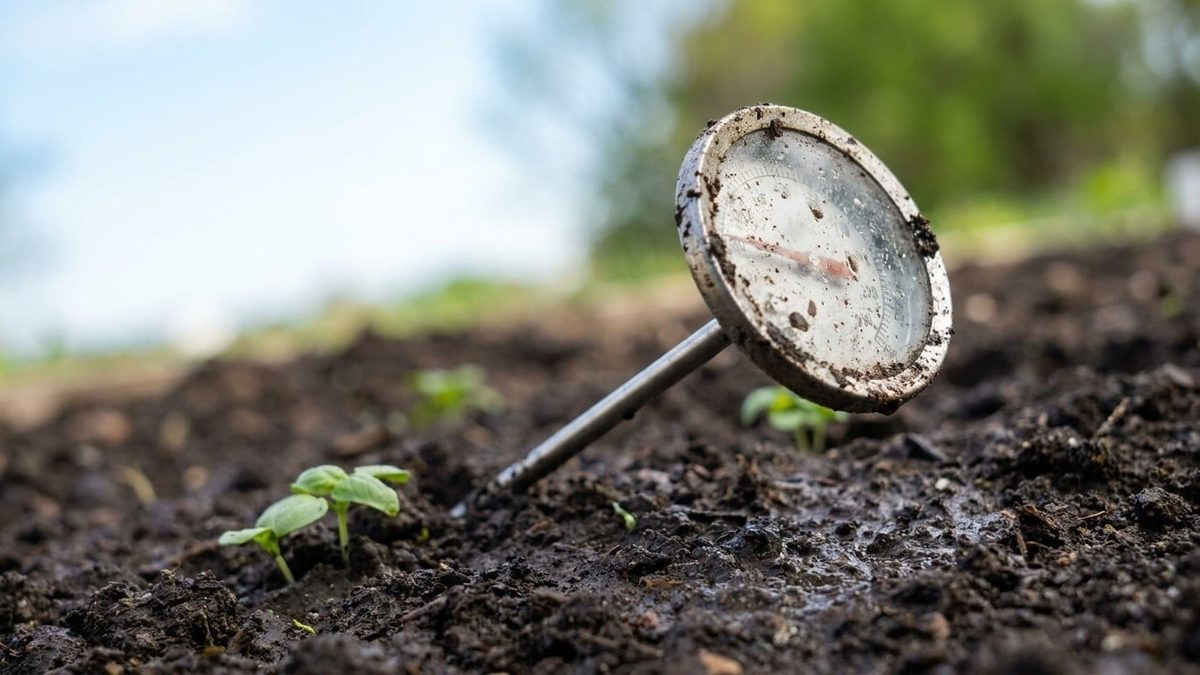
By late April, the thermometer creeps past 20°C. The air feels summery. Your instinct says it’s time to sow basil directly into the ground. You sprinkle the seeds. You wait. Weeks pass. Nothing. Then, the seeds just rot.
It is not your fault. The seeds are likely fine. Your watering is probably adequate. The culprit is invisible. It sits a few centimeters beneath the surface. The soil is still too cold.
Зміст
The Air vs. Soil Temperature Gap
Here is the classic trap for impatient gardeners. You see blue skies and think the job is done. Air warms up quickly after a few sunny days. Soil? It accumulates heat slowly. It remembers last winter.
A day at 22°C does not fix weeks of rain and chill. The ground holds a memory of cold. A damp, compacted, or cold field will kill a seedling before it even breaks the surface. Basil is the victim here. It hails from tropical India and Southeast Asia. It pays the highest price for this confusion.
Basil Needs 20°C in the Soil, Not Your Living Room
Basil germination requires at least 20°C in the soil. Not the air temperature on your porch. The temperature where the seed actually rests.
If conditions are warm (20–25°C) and moist, basil sprouts in five to seven days. Below that threshold? The seed waits. In cold, wet earth, waiting turns to rotting.
Ocimum basilicum is a frosty annual. It suffers below 10°C. It demands heat and light. It hates stagnant, cold roots.
Soil in late April rarely hits 20°C at 5 centimeters deep. The gap between air and soil temperature can exceed 5 to 8 degrees. Sowing before May 1st in open ground is a gamble. Statistics turn that gamble into failure.
You can sow directly from May to July. Space it out monthly to prevent bolting. But unless you live in a climate with constant 20°C warmth, this is risky. Even in May, north of the Loire, wait. Measure the soil. Use a simple garden thermometer. It costs less than 10 euros. It saves your crop.
The Pro Method: Start Indoors, Transplant Later
Professional growers do not guess. They sow under cover. Start six weeks before your final planting date. This usually lands between March and June.
Spread out your sowings every three to four weeks. This extends your harvest window. Basil bolts quickly. You want leaves, not flowers, for as long as possible.
The ideal start time is February. Inside a mini-greenhouse or heated space. Keep the temperature steady at 25°C. Constant warmth encourages strong growth. You do not need expensive gear.
The top of a refrigerator or a spot near a boiler works perfectly as an improvised heat source.
Once plants have two true leaves, it is time to move them outside. But wait for the air. Acclimatize them for one to two weeks before planting. The outside temperature needs to be at least 15°C. Day and night.
Forget the nights. That is the mistake most make. A plant moved out too early faces a night at 8°C. It might not die. It will take weeks to recover. Stunted growth is not the same as a dead plant. It is a wasted season.
Start inside. Keep it warm. Wait for the ground to catch up. Your basil will thank you with flavor, not compost.
The Soil Thermometer: What It Reveals That Calendars Miss
Calendars are liars. They promise spring on a fixed date. The soil doesn’t care about dates. It cares about heat. And right now, most gardens are still too cold for basil.
A soil thermometer costs less than ten euros. It is the most honest tool you own. Sunlight warms the air. It fools your brain. It makes you think planting time is here. The thermometer tells the truth. It measures the actual temperature of the earth.
Measure at 5-10 cm depth. Do it in the morning. That is when the soil is coldest. Wait for the needle to hit 18-20 °C. And keep it there. Stable. For several days in a row. Only then do you plant basil seeds outdoors.
Why Your Local Calendar Fails
One garden is ready. Another is frozen. They are only kilometers apart. Soil type changes everything.
Light soil. Sandy. South-facing. It warps up fast. It might be ready ten days early compared to neighbors.
Heavy soil. Clay. Shady. Under a wall. It stays cold. Long after you want to plant. The calendar suggests a date. The soil is the judge.
If you ignore the soil, you waste seeds. Basil hates cold wet feet. It rots. It gives up.
The Polaire Hack
Most gardeners wait. They check a thermometer. They see 16 °C. They sigh. They wait another week.
Stop waiting.
Use a trick. Borrowed from commercial growers. Get a black fleece or a row cover. Place it over your planting bed. One week before sowing.
Black absorbs heat. Fleece traps it. This simple step adds 3-5 °C to the soil temperature. That difference is enough. It creates the exact conditions basil needs.
Accelerate the warming. Don’t brave the cold. This is the only rule that matters.
Tools and Safety for the DIY Gardener
You don’t need fancy equipment. Just be precise.
Tools needed:
– Digital soil probe (cheaper than analog needles)
– Black polypropylene fleece (polaire noire)
– A small shovel for checking depth
– Gloves (soil can carry bacteria)
Safety tip:
Digging in cold, wet soil strains your back. Warm up first. Breathe. Don’t rush the digging. Wet clay clings to skin. Wash hands after handling untreated soil. Basil seeds are not toxic, but dirt under nails is miserable.
Material check:
Ensure your fleece is clean. No pesticides. No old chemicals. Fresh fleece works best. Reuse an old one only if you are sure it is sterile.
Which Soil Type Heats Fastest?
Sandy soil. Gravelly soil. Raised beds. These all retain less water. Less water means faster heating. Water holds cold. Clay holds cold.
If you have clay soil, don’t fight it. Raise the bed. Add sand. Add compost. Change the physics. Or use the fleece trick. It works on clay too. Just add an extra day.
How to Test Soil Temperature Correctly
Insert probe to 5 cm. Wait 60 seconds. Read.
Do this


