There is a simple reason a wrench exists. It turns bolts. It twists nuts. But picking the right tool from the dozens of options on your shelf isn’t always obvious. You need to look at the fastener. Is it hexagonal? Square? Oddly shaped? Then there is the space. Is it tucked behind a radiator? Buried in a wall? Or just sitting out in the open? The reach matters just as much as the size.
You’ve probably seen them all. Open end wrenches. Box end wrenches. Combination wrenches that do a bit of both. Adjustable wrenches that stretch to fit various sizes. Even specialized tools like a pedal wrench for your bike. It’s a lot to keep track of.
Зміст
How to Use a Wrench Without Stripping Bolts
Using a wrench seems easy. It really does. You grab the handle and turn. But do it wrong and you ruin everything. Strip the corners of the nut. Round off the head. Make the job impossible.
First, pick the correct size. This is non-negotiable. The wrench must fit snugly. If it’s loose, it wiggles. It slips. It eats away at the metal. A tight fit protects the fastener. It also protects your hands.
Grip the wrench so it forms an ‘L’ shape with the bolt. This gives you leverage. More leverage means less muscle. Less muscle means less fatigue when things get stuck.
Turn clockwise to tighten. Turn counter-clockwise to loosen. Righty tighty. Lefty loosey. It’s an old saying for a reason. It works.
If the bolt is stubborn, don’t jerk the wrench. Jerking leads to slips. Slips lead to bruised knuckles and broken tools. Apply steady, gradual force. Pull the wrench toward you. Never push. Pulling keeps your body behind the tool. Pushing puts your weight on top of it. If it slips while you push, you take the blow. Pulling keeps you safe.
You’re standing in a garage or workshop, staring at a box of tools. Or maybe you’re under a sink, elbow-deep in plumbing, wondering why a wrench keeps slipping. The answer is usually simple: you have the wrong type of wrench for the job.
Selecting the correct tool isn’t just about fitting a nut. It’s about safety, leverage, and not stripping out a bolt you can’t get back out. Let’s break down the specific wrenches you actually need for home renovation and DIY tasks.
Box End Wrenches
A box end wrench (also called a closed wrench) fits entirely around the fastener. You use it when there is enough room to slide the mouth over the bolt or nut.
These wrenches come in two main configurations: 6-point and 12-point. Most hexagon fasteners have six sides, so the 6-point version is the industry standard. It grips the flats of the nut securely. The 12-point version is less common for heavy work but can be easier to align in tight spots where you can’t rotate the wrench fully.
If you need to apply serious torque without rounding off the corners of a bolt, a 6-point box end is your best friend.
Open End Wrenches
Use an open end wrench when you can’t fit a box end wrench around the fastener. The U-shaped jaw slides over one side of the nut.
They are great for initial loosening. You can get them on faster quickly. But they are not ideal for final tightening. The jaws spread slightly under pressure. This can round off the edges of the nut, especially if you are using an adjustable wrench instead of a fixed-size one.
Combination Wrenches
This is the workhorse of the garage. A combination wrench puts a box end on one side and an open end on the other.
The box end side grips hexagonal or square nuts tightly. Use this side to break loose stubborn fasteners. The open end side is perfect for swift unscrewing once the nut is already loose.
DIY enthusiasts and pros alike rely on combination wrenches. They come in both metric and standard sizes. This covers almost every bolt dimension you will encounter in home renovation. Keep a set handy. You will use them constantly.
Adjustable Wrenches
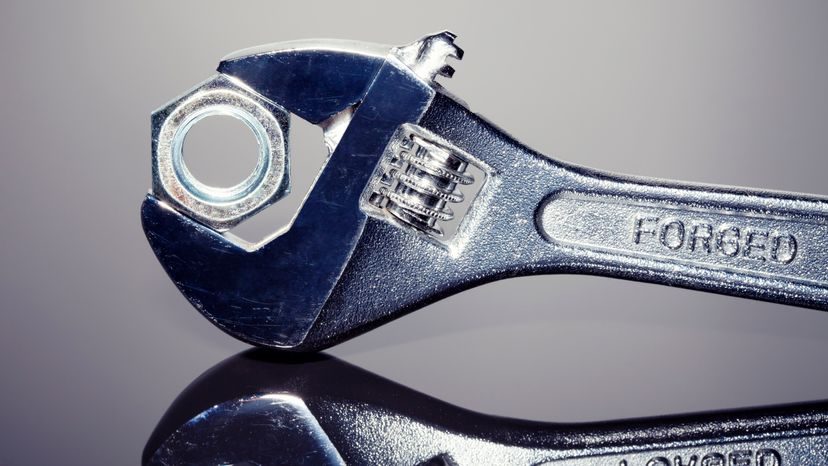
An adjustable wrench (often called a crescent wrench) changes size. You turn a screw to move the jaw.
This versatility is its only real advantage. The disadvantage is stability. The moving jaw can slip. It can injure your hand. It can damage the fastener.
Only use an adjustable wrench if the correct fixed-size wrench is not available. It is a backup tool, not a primary one. For serious work, the play in the jaw makes precision difficult.
Torque Wrenches
When you are working on sensitive equipment, like engine components or delicate furniture assembly, guessing the tightness is dangerous. A torque wrench controls the exact force applied to a bolt.
It prevents over-tightening. It also prevents under-tightening. Both scenarios lead to failure.
The tool looks similar to a socket wrench. It has a head, an adjustable socket, and a rotating handle with measurement marks. A locking nut at the bottom sets the torque level.
To use it, loosen the bottom nut. Adjust the handle to the needed torque level in lb-ft, lb-in, or Nm. Attach the socket. Turn the bolt. The wrench clicks or breaks away when it reaches the preset torque.
Always reset the wrench to its lowest setting after use. This keeps the internal spring accurate for the next job.
Socket Wrenches
Also known as ratchet wrenches, socket wrenches fit directly over the fastener. They are safer and easier to use than open or box end wrenchs in many situations.
The magic is in the ratcheting mechanism. It allows you to push or pull the handle to tighten or loosen nuts. You do not need to remove and reposition the wrench after every turn. This saves time. It is especially useful in tight spaces where movement is limited.
Sockets come in standard and extended depths. Extensions allow you to reach deep into engine blocks or behind cabinetry. If you are doing any mechanical work at home, invest in a good socket set.
Pipe Wrenches
Plumbing requires a different grip. A pipe wrench is designed for soft piping, like black iron pipe.
It has an adjustable jaw and sharp teeth. These teeth bite into the pipe. This creates a strong grip that prevents slippage. The wrench comprises a handle, an adjustable nut, a fixed jaw, and an adjustable jaw.
Hold the end of the handle for maximum leverage. Adjust the nut to fit the pipe size. Move the adjustable jaw up and down for positioning.
Pipe wrenches are longer than other wrenches. This provides extra leverage. They are essential for securing or loosening pipes effectively. Remember to adjust the jaw clockwise for smaller pipes and counterclockwise for larger ones.
Allen Wrenches
An Allen wrench (or hex key) is L-shaped with a hexagonal head. It fits into bolts with hexagonal sockets.
It stands out because of its two ends. Each offers distinct advantages. Insert the wrench vertically into the bolt for less leverage. This makes it slightly harder to turn but easier to reach tight spots.
For stubborn bolts, use the wrench at a 90-degree angle to the nut. This position maximizes leverage. It makes loosening tight bolts much easier. The longer side of the L-shape provides the most power.
Strap Wrenches
Sometimes you need to turn something without damaging it. A strap wrench uses a rubber strap to create friction. It grips securely without scratching delicate surfaces.
This design is ideal for sensitive materials. Most strap wrenches come with sturdy handles. Some attach to the square drive of ratchet wrenches.
Its adaptability makes it useful for professional tasks and everyday chores. Try opening a tight jar lid. The strap provides enough friction to break the seal without crushing the glass or plastic.
Pedal Wrenches
Cyclists need specific tools. A pedal wrench is designed for attaching or removing bicycle pedals.
It has a thin profile. This allows it to slide easily between the pedal and the crank arm. Space is often tight in this area. A standard wrench will not fit.
One end is usually angled. This provides extra leverage for loosening or tightening pedals. The other end is flat. This makes it convenient to use in different positions. If you maintain your own bike, this specialized tool is non-negotiable.
Final Thoughts on Tool Selection
You do not need every wrench mentioned here. But you need the right ones. Start with a solid set of combination wrenches and socket wrenches. Add an adjustable wrench for emergencies. Pick up a torque wrench if you are working on anything that involves safety under stress.
For plumbing, the pipe wrench is non-negotiable. For bikes, the pedal wrench saves your knees.
The rest depends on the job. The key is matching the tool to the constraint. Tight space? Go for a ratchet or Allen wrench. High torque? Box end or pipe wrench. Delicate surface? Strap wrench.
Keep your tools sharp. Keep them clean. And for heaven’s sake, do not use an adjustable wrench when a fixed size is available. Your thumbs will thank you. Or at least, the bolts will remain round.
You might be looking for a hammer or a drill, but often the real failure in a DIY project comes down to the tiny metal pieces holding everything together. If you’ve ever watched a shelf sag or a door hinge pull away from the frame, you’ve likely encountered the wrong fastener for the job.
Essential Home Repair Tools
Before you even think about screws, you need the right implements to drive them. If you’re not calling a handyman, your toolbox needs to be stocked with basics. You don’t need a professional contractor’s kit, but you do need reliable hand tools. A sturdy hammer with a good grip. A set of screwdrivers that actually fit the screws you have. A drill with a magnetic bit holder makes life significantly easier. Without these, you’re just guessing. And guessing costs time. And money.
Hand Tools for the Everyday Fixer
Most people underestimate how much manual labor goes into a renovation. You’re not just moving heavy objects. You’re measuring, cutting, and adjusting. Hand tools are the unsung heroes here. A tape measure that doesn’t stick. Pliers for gripping stubborn nuts. A utility knife for precise cuts. These seem obvious until you’re trying to tighten a bolt with a wrench that’s too big or cutting a board with a dull knife. The friction isn’t just annoying. It’s dangerous. Sharp tools cut clean. Dull tools slip.
Understanding Fasteners: Nails vs. Screws
Fasteners are the connectors. They join wood to wood, metal to wood, drywall to stud. But not all fasteners are created equal. Nails provide shear strength and are quick to drive. They’re great for framing. Screws offer tensile strength and hold tighter. They’re better for finishing work. If you use a nail where a screw should go, your joint might hold initially. But over time, vibration and weight will loosen it. The screw resists pulling out. The nail does not. Know the difference before you start drilling.
Which Type of Bolt Do You Need?
Bolts are different. They usually require a nut on the other side. They’re used for heavier loads or where the connection needs to be disassembled later. There are three main types you’ll encounter in a standard home repair context.
- Carriage bolts : These have a rounded head and a square neck underneath. The square part bites into the wood or material so the bolt doesn’t spin when you tighten the nut. Perfect for outdoor furniture or gate hinges.
- Stove bolts : These look like wood screws but have a hex head. You use a wrench to tighten them. They’re common in cabinetry or when attaching hardware to thick wood.
- Machine bolts : These are designed to go through pre-drilled holes in metal or wood. They often use a locking nut. Think of them for structural connections or attaching heavy machinery to a floor.
Choosing the right one depends on the material. If you’re drilling into drywall, a bolt is overkill. You need a toggle anchor. If you’re attaching a deck board to a joist, a carriage bolt might be the right call. But if you’re just hanging a picture, a nail or a small screw is all you need.
Where to Find the Right Fastener
Hardware stores are overwhelming. Aisle after