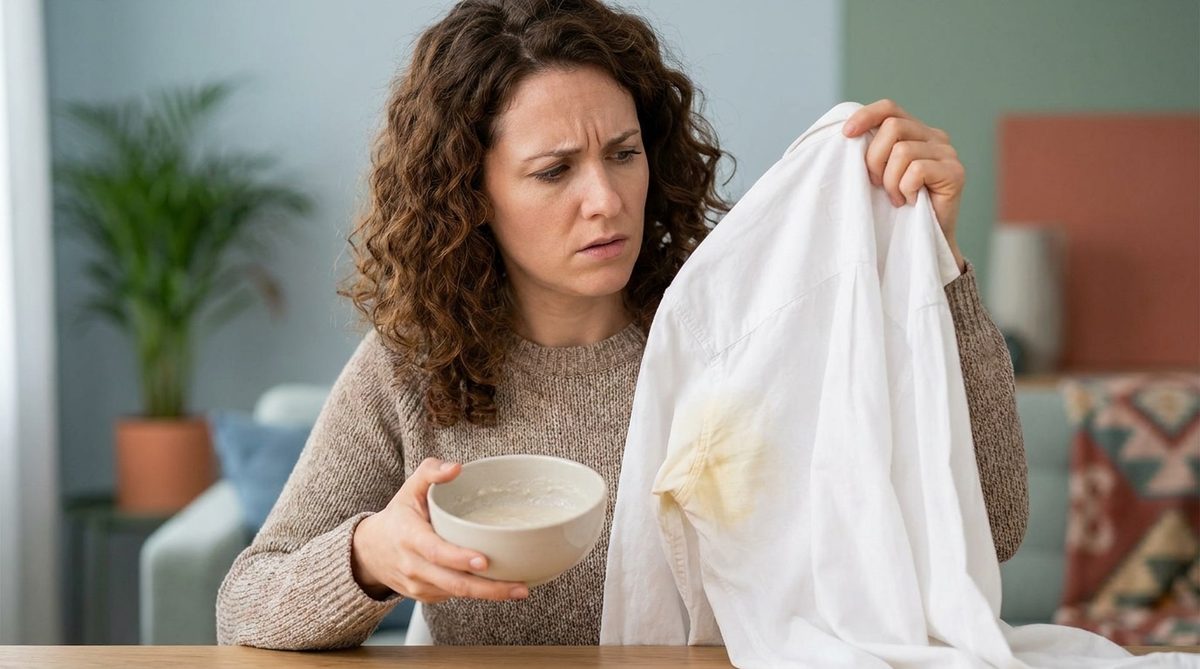
Yellow underarm stains don’t just ruin the look of an otherwise pristine shirt. You can wash it repeatedly. You can switch deodorants. You can buy expensive stain removers. The mark often stays. It fixes itself to the fabric. The shirt looks worn out before its time. The rest of the garment might be perfect. The collar is crisp. The cuffs are clean. The cotton is intact. Yet that yellow patch remains. It’s frustrating. But it’s not permanent. You can save these shirts with a simple mixture found in most kitchens. No scrubbing. No expensive products. Just a few cents and a precise technique.
Зміст
Why Regular Washing Fails on Sweat Stains
Sweat alone isn’t usually the culprit. The yellowing comes from a chemical reaction. Your sweat contains salts. Your deodorant contains specific ingredients, especially in anti-perspirants. When these mix, they form a deposit. The deposit oxidizes. It acts like a dye that bonds directly to the fabric fibers.
A standard machine cycle removes the smell. It does not remove the stain. The mark sits deep in the fibers. Heat from the dryer or hot wash cycle can actually set it further. It’s like cooking the stain into the cloth. This is why white shirts often turn yellow only under the arms while the rest stays white. That area is stressed more. It holds more residue. To fix this, you need a targeted approach. You must dissolve the grease, the salts, and the oxidation simultaneously. Laundry detergent alone isn’t enough.
The Low-Cost Solution: Baking Soda, Dish Soap, and Peroxide
This specific trio works because each ingredient handles a different part of the stain. Baking soda helps break up and neutralize. Dish soap cuts through the grease. This includes sebum and leftover deodorant residue. Hydrogen peroxide lightens the oxidation causing the yellow tint.
All three items are cheap. They are easy to find. Together, they form a paste that sticks to the fabric. You want a consistency similar to toothpaste. Too runny and it spreads everywhere. Too dry and it won’t penetrate. Use these proportions for one shirt:
- 2 tablespoons of baking soda (about 30 grams)
- 1 tablespoon of dish soap (15 ml)
- 1 tablespoon of 10-volume hydrogen peroxide (15 ml)
Mix them in a small bowl with a spoon. If the paste is too thick, add a few drops of water. If it’s too watery, add a pinch more baking soda. This method works best on cotton and cotton blends. These fabrics hold stains the most. The goal isn’t to bleach the whole shirt. It’s to break up the crust in the armpit area before the wash. Let the machine finish the job without leaving a halo.
The Application Method for Best Results
Precision matters here. Lay the shirt flat on a clean, light-colored towel. Expose the armpit area clearly. Spread the paste in a thin, even layer. Cover the stain and a little bit of the surrounding fabric. Don’t scrub hard. You don’t need to agitate the fibers violently.
Use your fingertips or a soft toothbrush. Gently massage the paste into the fabric. Just enough to help it penetrate. Once applied, let it sit. The ideal time is 20 to 30 minutes. Leaving it on longer doesn’t help. It can even dry out the fabric unnecessarily.
After the wait, rinse the area with warm water. Remove the excess paste. Then, wash the shirt as usual. Use your regular detergent. Set the machine to 40°C (104°F) if the care label allows. This temperature helps lift remaining residue without damaging the fabric like higher heat would.
Dry the shirt in the air. Avoid the dryer. Heat from a tumble dryer can set any remaining trace permanently. Once the shirt is dry, check the result. The fabric should look uniform. No dull patches under the arms.
Avoiding Common Mistakes and Fabric Issues
This method is simple, but there are traps. Be careful with colored shirts. Hydrogen peroxide can lighten certain dyes. Test it first. Try a small amount on an inside hem or a seam. If the color changes, stop. Use a gentler variant. Stick to baking soda and dish soap. Replace the peroxide with warm water. The result might take a few more washes, but it’s safer.
Delicate fabrics are a different story. Silk. Wool. Fragile viscose. Do not use this pre-treatment on them. The armpit area distorts easily. Spot cleaning these materials requires cold, gentle methods. Don’t force it.
Another common error is using too much dish soap. More product doesn’t mean better results. Too much soap creates excessive suds. It’s hard to rinse out. A soapy film can linger on the fabric.
Never mix this with chlorine bleach. Bleach can yellow certain textiles. It weakens the fibers over time. Stick to this targeted routine. If the stain is old and stubborn, you might need to repeat the process. Don’t use harsh chemicals to force the stain out. Repeat the gentle method instead.
Once you’ve rescued the shirt, the real battle is keeping it that way. The goal is simple: stop the yellowing from coming back. The most effective reflex is not waiting for the ring to set in. A quick pre-treatment on the armpit area as soon as you see a shadow appears takes two minutes. It prevents the stain from setting deep into the fibers.
Think about your daily routine. Let your deodorant dry completely before pulling on your shirt. This limits the chemical reaction with sweat. Using less product often helps more than we realize. Another critical point: never bake a residual stain in the dryer. Especially after a hot day or wearing the shirt for hours. Heat locks in the damage.
Regular washing at 30 or 40 degrees Celsius preserves whiteness. Check the fabric label. Good rinsing is key because detergent residues dull fabric and attract dirt. Simple sorting in the laundry basket prevents transfers. Keep light shirts separate from dark colors that bleed. With these habits, armpits stay clean longer. Spot treating becomes an exception. Not a repeated chore.
Why yellow stains stick to white shirts
A yellow stain is not a death sentence. Even for a shirt you thought was destined for the back of the closet. Understanding why the stain sticks is half the battle. The culprit is usually a mix of sweat and aluminum-based antiperspirants. Proteins in sweat react with the salts. Over time, this creates a yellow discoloration.
Heat makes it worse. High temperatures in the washer or dryer can set the stain permanently. That’s why treating early is so important. Once the bond forms, removal becomes much harder.
The bicarbonate and hydrogen peroxide fix
When you spot a stain, act fast. Use a mixture of baking soda, dish soap, and hydrogen peroxide. Apply it directly to the affected area. Let it sit for a few minutes. Then wash at 40 degrees Celsius. The fabric often returns to its original state in one go.
Dish soap cuts through the oils. Baking soda lifts the discoloration. Hydrogen peroxide bleaches the stain gently without damaging the fibers. This combination works better than harsh chemicals for most cotton blends.
Regularity over intensity
The most important factor is consistency. Treat stains early. Dry carefully. Limit residues in your daily routine. Do not skip the rinse cycle. Ensure all soap is gone from the fabric.
How often should you treat underarm areas? Every time you see a slight discoloration. Don’t wait for a big yellow patch. A quick scrub with the mixture stops the process before it starts.
Choosing the right tools and materials
You don’t need expensive products. Standard household items work best.
- Baking soda : Affordable and effective at lifting odors and stains.
- Dish soap : Cuts grease and body oils effectively.
- Hydrogen peroxide : A mild bleach alternative. Test on a hidden area first.
- Soft brush : For gentle agitation without damaging fabric.
Safety matters. Wear gloves when mixing peroxide. Ensure good ventilation. Avoid mixing peroxide with vinegar. That creates harmful fumes.
Where to focus your effort
The armpit area is the primary target. But check other sweat-prone zones


