Buying a house is stressful. Buying a house with soul, history, and potential code violations is a different beast entirely. You want those original hardwoods. You want the crown molding. You want the story behind the walls. But before you sign anything, you need to understand the specific rules of engagement for historic properties.
The process starts with verification. “Historic” isn’t just a marketing term used by agents to justify a higher price tag. It’s a legal designation with real-world consequences and rewards.
Зміст
Checking the Designation Status
Your first step isn’t looking at the roof. It’s checking the database.
You need to determine if the property is officially listed on the National Register of Historic Places (NRHP). This is the federal government’s official list of districts, sites, buildings, structures, and objects deemed worthy of preservation.
Check the NRHP online. Is the property listed individually? If not, it might still be part of a historic district. Use the advanced search feature on the NRHP website to look up historic districts in your target area. A property can be historic by association with its surroundings even if it isn’t listed on its own.
If the NRHP search comes up empty, don’t write it off yet.
Many properties aren’t individually listed but have received local or state recognition. The National Park Service notes that if a house was built before 1936, there is significant wiggle room. Previous owners may have worked with local agencies to gain historic benefits without triggering full federal listing.
“When in doubt, check with your local historic preservation office. They are the ultimate authority on whether a property has followed the historic path.”
Visit the National Park Service website. It has quick links to every state historic preservation office. From there, you can find contact info for local preservation societies. They will know if there are pending applications or existing designations that aren’t showing up on federal databases.
Once you have a confirmed historic status, you can weigh the pros and cons. Let’s start with the financial upside.
The Financial Upside of Owning a Historic Home
You aren’t getting this for free. The government offers incentives because preserving history costs money. Here is where the money comes from.
1. Renovation Loans
The U.S. Department of Housing and HUD offers specific help for this. If your historic property is also a fixer-upper, look into the Federal Housing Administration’s 203k program.
This loan allows you to finance up to $35,000 in additional funds into your mortgage specifically for repairs and renovations. It is designed for historic properties. It bridges the gap between buying the house and making it livable.
2. Tax Breaks
Tax freezes, abatements, and credits are common. These can come from federal, state, county, or local governments.
Here is the catch. Federal tax breaks, particularly the 20% renovation credit, usually require the property to be “income-generating.”
If you are fixing up your own primary residence, you likely won’t get the federal credit. If you are turning the space into a business—a bed and breakfast, a storefront, an office—you might. The rules vary by jurisdiction.
3. Preservation Easements
This is a powerful tool for many historic homeowners. A preservation easement is an agreement between you and a government or nonprofit agency.
You agree to maintain the historic character of the property. In exchange, you get tax breaks. This isn’t a new concept. Many states and cities have established systems to evaluate these proposals.
Because every locality operates differently, you must check with your local historic preservation office for specific easement programs. They will outline what changes are allowed and what tax incentives are available.
These benefits are substantial. They offset the high cost of maintaining old structures. But there is a flip side.
The Downsides of Historic Home Ownership
Owning a historic property means living with constraints. The government and local boards care about the aesthetic and structural integrity of the past. This limits your autonomy.
“Historic designation often means you cannot simply knock down a wall or replace windows with modern vinyl without approval.”
You will face strict review processes. Every change you make likely requires permission. This slows down renovations. It increases costs. It requires patience.
You also face the risk of mandatory maintenance. If an easement is in place, you may be legally required to preserve certain features. You can’t ignore them.
Furthermore, insurance costs can be higher. Old wiring, old plumbing, and older roofing materials carry more risk. You need specialized coverage.
Finally, resale value can be tricky. While some buyers love the history, others see only the headache. You are narrowing your pool of potential buyers.
The benefits are real. The costs are real. The restrictions are real.
Before you make an offer, you need to know exactly what you are signing up for. The next section breaks down the specific pitfalls you need to avoid and how to navigate the approval process without going crazy.
Continue to Part 2 for the downsides.
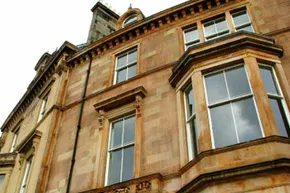

You want tax breaks. You get them. But there is always a catch.
To keep those breaks, historic property owners often have to sign away certain rights. This is where facade easements come in.
An easement is essentially a donation. You give the historic preservation organization the rights to the exterior of your building. In return, you get a charitable deduction. It sounds simple. It isn’t.
Check your deed. Look for these filings before you buy. Are they permanent? Or do they expire? The tax implications can be messy.
Why Facade Easements Matter
Think of it this way. You are selling the visual character of your home to a non-profit. The property value might drop because of this restriction. That’s good for your buying price. It’s also good for property taxes.
But then you want to renovate.
If you want to change the exterior, you have to jump through hoops. Some easements cover the facade. Some cover the interior. Some cover the structure itself. Others look at landscaping.
It depends on the specific legal language.
If you want to swap out historic windows or change the roofline, you might face a fight. The preservation group has veto power. You cannot just buy new siding and call it a day.
The Verdict on Historic Ownership
Before you sign the papers, look at the title.
If it’s clean, you’re in the clear. You can explore the tax advantages freely.
If there are riders, pause. Weigh the headache against the benefit. Do you want the prestige? Or do you want the freedom to change things?
Most people buy historic homes for the charm. They rarely buy them for the ease of renovation.
Common Questions About Historic Properties
Are there real tax incentives?
Yes. Depending on where you live, you might get a tax freeze or abatement. Local governments often offer credits for rehab work.
The federal government has a specific program. It offers a 20% tax credit for income-producing historic properties that you rehabilitate. That’s significant money if you’re flipping a building or running a business.
Is it a good investment?
Prices can be higher. A historic property can be worth 26% more than similar homes in the same area. They also tend to hold their value during market downturns.
There is a downside. Regulation is strict. If your home is on the National Register, you can’t just do whatever you want. Renovations are difficult. Yet, they are often necessary because the house is old.
What makes a home historic?
The National Register of Historic Places sets the bar. It’s not just about age.
A home might qualify if it:
– Is linked to significant historical events.
– Belonged to someone important in history.
– Shows distinctive construction methods of a specific period.
– Was designed by a master architect.
– Has high artistic value.
– Provides important historical data.
How old does it have to be?
Generally, 50 years.
That’s the standard cutoff. If a property is younger, it has to be exceptionally important to get the status. It’s a high bar for newer buildings.
Are historic homes cheaper to own?
No. They are usually more expensive.
You pay more to buy them. You pay more to fix them. Guidelines are strict. Old homes have inefficient utilities. You deal with factors outside your control.
The cost adds up quickly.