Most gardeners know the drill. Spring comes, things explode with green, and then summer heat turns everything brown by August. You end up staring at a dormant patch of dirt while wondering where the color went. But there is a shrub that refuses to take the hint that the party is over.
It is the butterfly bush. Specifically, the Buddleja genus.
This plant is not for everyone. It is aggressive. It is loud. It is beautiful in a way that demands attention. If you want a quiet, understated garden, look elsewhere. But if you want a flowering display that lasts from early spring right through late autumn, this is the one.
Зміст
Why It Blooms for Ten Months
The claim is often made that this shrub flowers for ten months out of twelve. In mild climates, it holds up. In cooler zones, it might shut down for a month or two during the worst of winter. But for the vast majority of the growing season, it is putting out spikes of color.
The flowers look like butterflies. They are clustered tightly on long stems, creating plumes of purple, white, pink, or yellow. Bees love them. Hummingbirds ignore them (mostly) but butterflies swarm them. It is a magnet for pollinators.
This is not a subtle plant. It grows fast. It grows wide. You cannot tuck it into a tight corner and expect it to stay small without constant pruning. It needs room to breathe. And it needs sun. Full, direct sunlight is non-negotiable for maximum blooms. Shade turns it leggy and sparse.
Choosing the Right Variety
Not all butterfly bushes are the same. The old varieties can get huge. We are talking six feet tall and six feet wide. Some grow to eight feet. That is a problem if you have a small yard.
Modern breeding has solved this. Look for the Buddleja davidii hybrids. Specifically, the dwarf varieties.
- Lo and Behold series: These stay compact. They are perfect for borders or large containers.
- Blue Chip series: Shorter, bushier, and highly fragrant.
- Pulse series: Another dwarf option with vibrant colors.
If you have space, the classic varieties like Buzz or Summerwise are fine. But for most homeowners, the dwarf types are the practical choice. They reduce the workload. And let’s be honest, pruning a massive shrub every year is a chore you will eventually resent.
How to Plant and Prepare
You are not planting this shrub to hide it. You are planting it as a focal point.
- Pick the spot. South-facing is best. It needs at least six hours of direct sun. If you plant it in the shade, you will get leaves but very few flowers.
- Soil matters little. This plant is tough. It tolerates poor soil. It tolerates clay. It tolerates sand. It does not like waterlogged roots, so ensure good drainage. If your soil is heavy clay, dig a wide hole and mix in some compost.
- Dig the hole. Make it twice as wide as the root ball. Do not dig deeper. The top of the root ball should sit level with the
Late blooming purple powerhouse
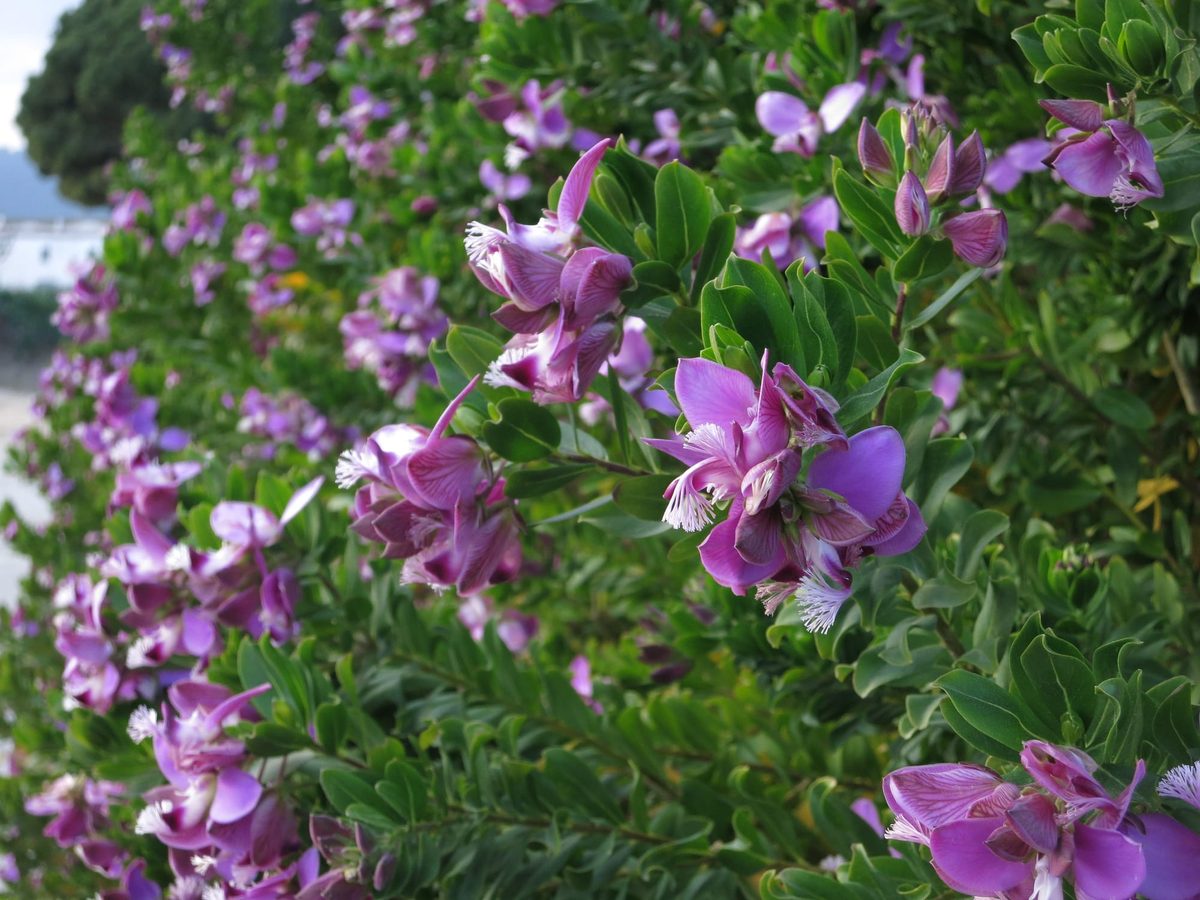
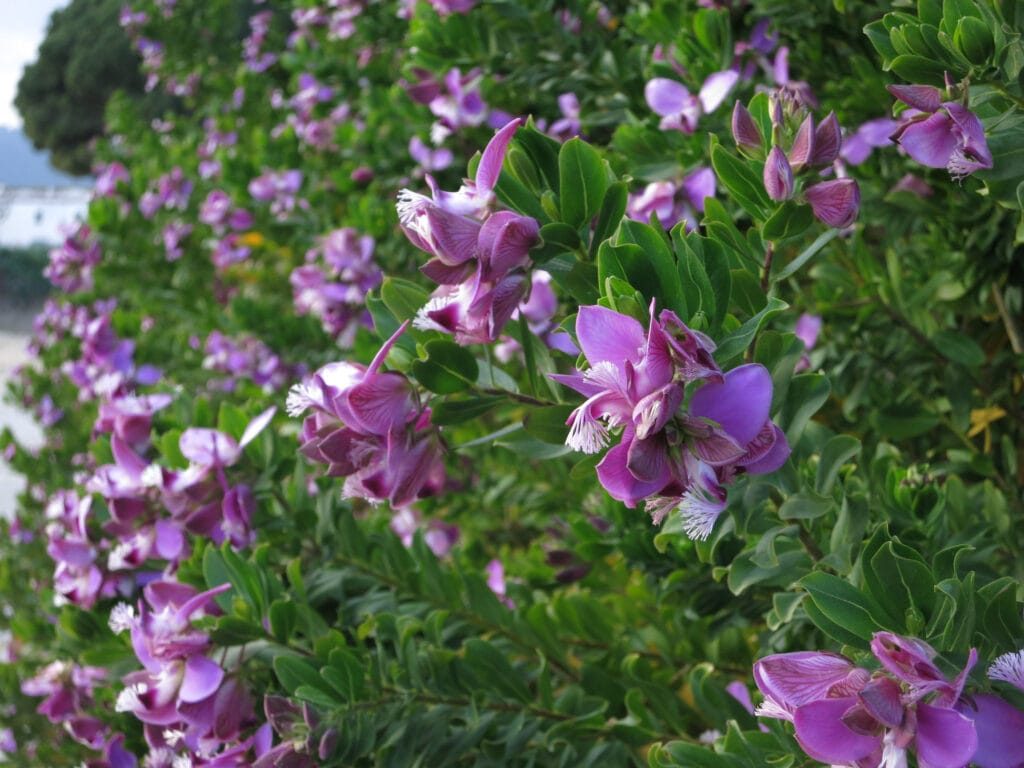
Most gardeners are looking for something that can withstand the cold and still provide color. Enter Polygala myrtifolia. It’s a shrub native to South Africa, often called myrtleleaf polygala, and it doesn’t take itself too seriously. It is evergreen. It’s tough. And it blooms when almost nothing else is bothering to look pretty.
The flowers are soft purple. They grow in groups that look a bit like butterflies caught in mid-flight. The season doesn’t just start in spring; it kicks off in February and can last until November. It’s a long time coming to get something vibrant and colorful into dormant soil.
Why this shrub is suitable for every garden
You may be wondering which plants are worth the effort. This is low maintenance, but rewarding.
- Year-round structure: It does not drop its leaves. As the perennials fade, this shrub maintains a dense, bright green canopy. Your garden won’t look dead in winter.
- Pollinator magnet: Butterfly shaped flowers are not just for show. Bees and butterflies love them. It’s a small step towards biodiversity in your garden.
- Drought Tolerant: Once established, it tolerates dry spells well. It adapts to various soils, but clearly prefers to be comfortable.
How to grow Polygala Myrtifolia successfully
It does not require much maintenance, but needs the right setup. You aren’t growing a delicate orchid here. You’re growing a hardy shrub.
Sun is non-negotiable for peak performance.
Plant it in a place where it gets full sun. If you put it in partial shade, it will survive, but the flowers will be few. You want those long clusters, right?
Drainage is the real key.
This shrub hates wet feet. If your soil is heavy clay, you need to amend it. Mix in gravel or coarse sand. Good drainage is the difference between a thriving bush and a rotting root system.
Watering requires patience.
New plants must be watered regularly, especially in summer. Do not let them dry out completely during the first few months. When the roots become established, they become independent. You can reduce the frequency, but do not ignore it during heat waves.
Pruning for shape and size.
It could be big. We are talking about 2-3 meters high, if you allow it. Prune it lightly after each bloom to keep the plant under control and encourage it to bloom. Cut off the leggy stems. It keeps the plant neat and forces it to bush out rather than stretch upward.
Verdict
It’s a plant that works harder than you. Give it sun, well-drained soil and a little water. In return, you get clouds of purple flowers from winter to late fall. It fills an awkward gap in the gardening calendar when everything else has given up.
Just pay attention to the height. A 3 meter bush on a small terrace is not ideal. But in a border? It is a statement that requires very little of your time. It’s not a question of whether it will grow. It’s about whether you have room to go wild.
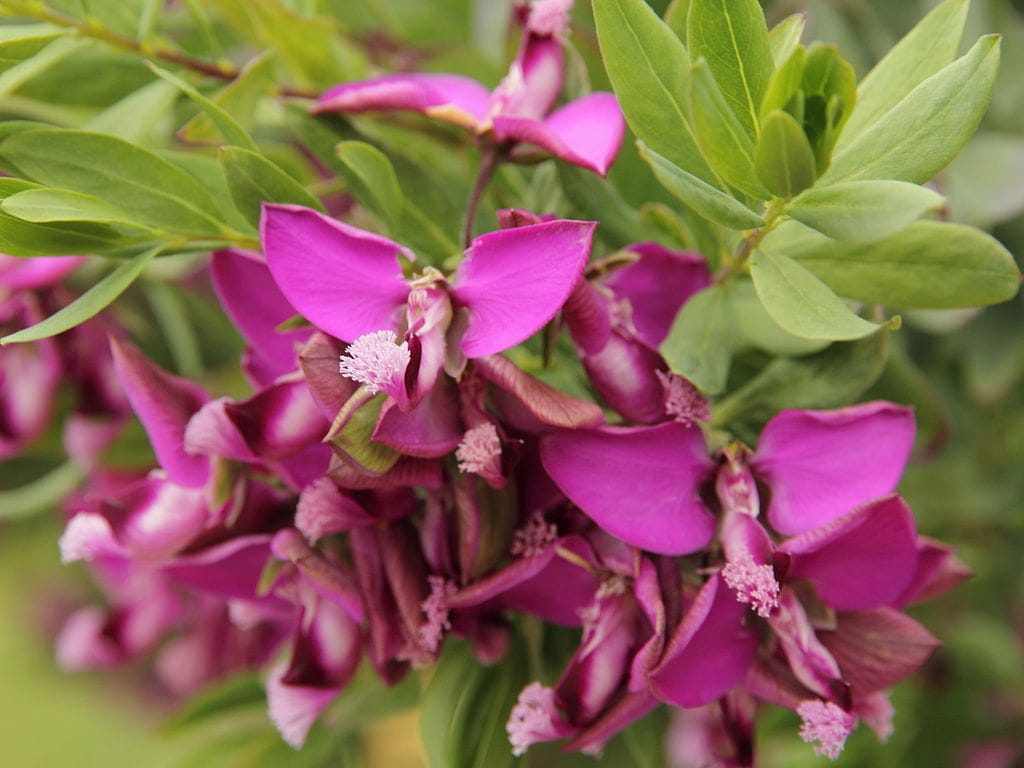
Not all Polygala myrtifolia plants are created equal. The species has been bred into several distinct forms, allowing you to match the plant to your specific space and aesthetic goals. If you are looking for a Polygala myrtifolia variety that makes a statement, size matters.
Which Polygala myrtifolia variety is best for your space?
If you want maximum visual impact, look for Polygala myrtifolia ‘Grandiflora’. As the name suggests, this cultivar produces significantly larger flowers. It is the right choice if you want the plant to stand out as a focal point rather than blending into the background.
For smaller patios, balcony railings, or tight garden corners, Polygala myrtifolia compacta is the practical answer. It retains the vibrant, butterfly-shaped blooms of the standard type but stays much smaller. It fits where larger shrubs would feel cluttered.
Then there is Polygala myrtifolia nana. This is the smallest option, making it ideal for edging paths or growing in containers. Because of its diminutive stature, you can weave it into more complex floral compositions without overwhelming other plants.
Why choose Polygala myrtifolia for biodiversity?
Beyond aesthetics, this shrub plays a functional role in the ecosystem. Polygala myrtifolia is a potent nectar producer. Its flowers are magnets for bees and other pollinators. If you are trying to boost biodiversity in your garden, adding this plant supports local insect populations. It is not just decoration; it is food for the wildlife you want to attract.
How to integrate Polygala myrtifolia in your landscape
This shrub is versatile enough to fit into Mediterranean, modern, or urban garden styles. Here is how you can use it practically:
- As a hedge: Plant several bushes close together to create a dense, flowering hedge. Because it blooms for so long, you get year-round visual interest from a structure that remains green even in winter.
- In pots: It thrives in containers, provided the soil drains well. On a terrace or balcony, the wind catches the papery petals, making the plants look like they are fluttering.
- In flower beds: Pair it with other drought-tolerant or Mediterranean favorites. Lavender, roses, and rockroses (Cistus) create a cohesive, colorful mass when planted alongside Polygala.
Can Polygala myrtifolia survive the cold?
You need to check your hardiness zone. While it prefers mild climates, Polygala myrtifolia can tolerate temperatures down to -5°C.
If you live in an area with harsher winters, do not plant it directly in the ground without protection. Use pots so you can move the plant to a sheltered spot during frost. Alternatively, cover it with a winter fleece (hivernage) when freezing temperatures are forecast.
Is Polygala myrtifolia worth the effort?
Yes, if you want low-maintenance color. The plant offers nearly 10 months of bloom. The combination of persistent foliage and butterfly-like flowers adds dynamism to any yard. It requires little care, adapts to small or large spaces, and brings in pollinators.
If you are looking for a shrub that delivers consistent charm and abundance without demanding constant attention, this is it. The question is not whether it works, but whether you have the space to let it spread.