Spring is here. The urge for lightness hits hard.
Your kitchen is the heart of the home. It’s where you cook, eat, and live. But sometimes, the layout suffocates you.
For decades, we’ve been told to maximize every inch of space. That meant floor-to-ceiling cabinets. Heavy blocks of wood. Full doors.
It looks tidy. Until it doesn’t.
Those massive upper cabinets cast shadows. They make the room feel smaller. They trap clutter because there’s nowhere else to put it. You end up keeping appliances you never use. The space feels heavy. Confining.
It’s time to breathe.
Removing those oppressive storage blocks changes everything. Light floods the prep zone. The ceiling feels higher. The room expands visually. Cooking stops feeling like a chore in a tiny box and starts feeling like a ritual.
Here is how to replace bulky overhead storage with open, practical alternatives.
Зміст
Why Upper Cabinets Stifle Your Space
Let’s be honest. The “floor-to-ceiling” kitchen trend is dying.
Those full-height cabinets are architectural dead weight. They block natural light. They create a visual wall that shrinks your square footage.
Worse, they encourage hoarding. When everything is hidden behind closed doors, you forget what you have. You buy duplicates. The kitchen becomes a storage unit, not a workspace.
Minimalism isn’t just an aesthetic. It’s functional. It forces you to keep only what you actually use.
Alternatives to Traditional Overhead Storage
You don’t need to throw out every shelf. You need to rethink how you store your daily essentials.
1. The Floating Shelf: Expose Your Best Stuff
The most popular replacement? A single, continuous floating shelf.
Mount it along the wall. Use natural materials like solid wood or metal. It adds warmth without bulk.
This isn’t just storage. It’s display.
- Glass jars with pasta and rice
- A curated selection of ceramic mugs
- Trailing herbs like basil or mint
Using what you already own as decor reduces waste. It also keeps frequently used items within arm’s reach. No more digging through dark cabinets to find your favorite coffee mug.
2. Wall-Mounted Racks: Tools Within Reach
If you need more function than display, go for a credenza bar or wall-mounted rack.
Mount it under a small shelf or directly on the wall. Add hooks.
Your spatulas, ladles, and strainers hang right where you need them. Near the stove. No bending. No reaching.
This setup feels chic. It’s practical. It’s low-cost.
You can hang spice jars too. Keep your cooking station organized and efficient. The goal is to have everything at arm’s length. No clutter on the counter. Just clean lines and accessible tools.
3. The Bare Wall: Embrace Negative Space
Sometimes, the best storage is no storage at all.
Leave a section of the wall bare. Paint it with mineral finishes in soft, muted tones. Or install textured tile that runs all the way up.
Lighting makes or breaks this look.
Install warm sconces. Cast a gentle glow on the empty wall. It turns a blank space into a focal point.
This approach requires discipline. You can’t stack boxes here. But the visual relief is worth it. The room feels larger. Calmer.
Reorganizing for Low Storage
If you remove the upper cabinets, you lose storage volume. You must compensate.
Move your heavy items to the base cabinets.
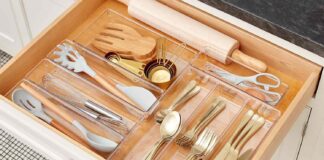
Ditch the standard shelves. Install deep, wide drawers.
The Drawer Advantage
Deep drawers are superior to shelves for heavy items.
- Pots and pans
- Cast iron skillets
- Large serving dishes
Use adjustable dividers. Organize the contents.
Suddenly, you aren’t climbing a stool to reach a casserole dish. You pull a drawer. It’s right there.
This shift improves ergonomics significantly. You spend less time searching. You cook faster. You clean up easier.
The Result: A Kitchen That Breathes
Stripping away the heavy overhead storage isn’t just about style. It’s about flow.
It’s about keeping your space open. Airy. Functional.
You gain light. You gain space. You gain clarity.
The key is balance. Keep the essentials accessible. Hide the clutter. Use quality materials that age well.
Your kitchen becomes a sanctuary. Not a storage closet.
Start with one wall. Clear the shelves. Add a floating plank. See how the light changes.
Does your kitchen feel like a place you want to be? Or does it feel like a warehouse?
The choice is yours.