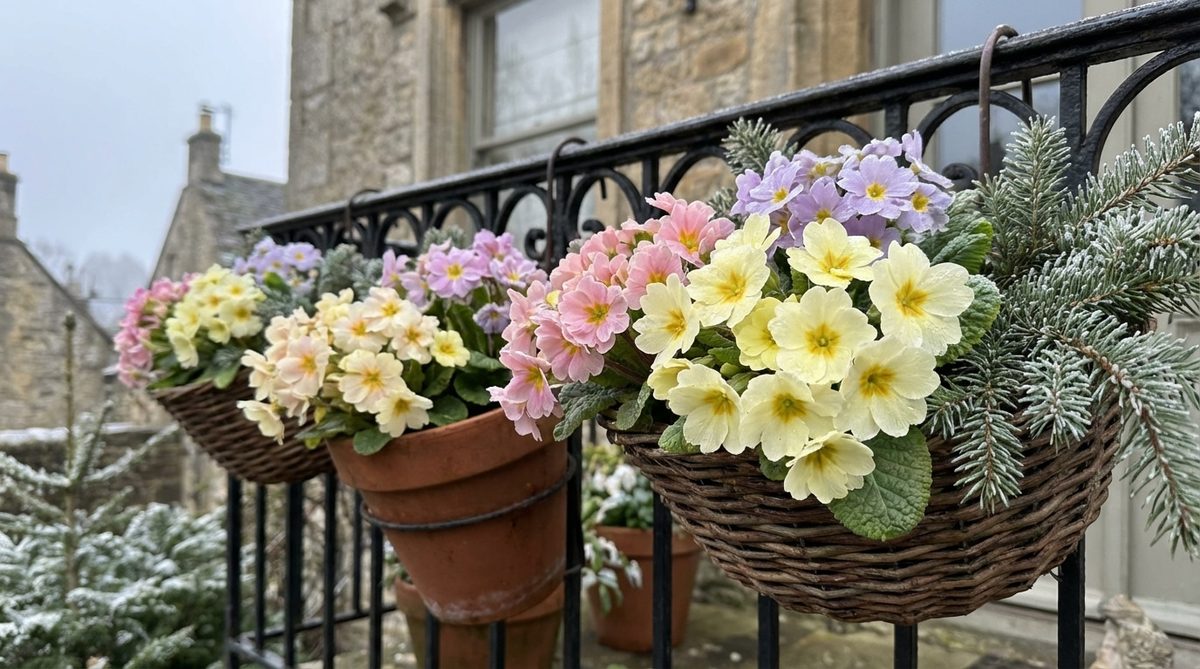
February grayness feels heavy. Most urban balconies look like storage units right now. We’ve been sold a lie. The myth says gardening is a spring-and-summer hobby. That’s wrong. It’s a fundamental error. It keeps city dwellers from seeing beauty when they need it most.
The thermometer is low. February 2026 isn’t kind. Yet you can brighten your exterior space. You don’t need a greenhouse. You don’t need expensive machinery. There is a cheap, simple solution. Experienced gardeners use it to turn gray concrete into a color explosion. Stop waiting for the ice saints. Your balcony can wake up now.
Зміст
Why primroses are the ultimate winter balcony plant
Nature isn’t hibernating completely. Most plants are dormant. Some are just waiting. Walk through any nursery in January or February and look closely. The stands are full of hardy winter plants. They are ready to go.
The smart gardener watches the natural cycles. February signals a quiet but powerful awakening. Leaving planters empty is a missed opportunity. You are missing the chance to create contrast against the gray sky. You deserve to drink coffee outside. Even if you are wrapped in a scarf. You want life around you.
Enter the primrose (Primula ). It is an understated herbaceous plant. People underestimate it often. It is the queen of early blooms. The name comes from the Latin primulus. It means “first.” It is one of the first plants to flower at the end of winter.
Why is this the key to a February balcony?
- Extreme cold tolerance: It handles frost and chilly mornings without complaining.
- Vibrant color palette: From bright yellow to deep violet, fuchsia pink, and velvet red. It wakes up any urban backdrop.
- Low cost: It is incredibly economical. You can fill large volumes quickly.
Forget the idea that it is fragile. It is robust. It thrives while other plants look sad. It requires no advanced horticultural expertise. You get immediate satisfaction.
Lighting and care for long-lasting blooms
The primrose is low-maintenance. But it has one vital requirement for that spectacular display. Light.
To succeed in February, placement matters. Put your pots or planters on a well-exposed balcony. It does not fear winter sun. The sun is gentler now than in July. Good brightness stimulates new buds.
Watering is where people fail. The classic mistake is overwatering. Evaporation is low in winter. Keep the soil fresh. Never let it become waterlogged. Wet roots rot. That kills the plant.
Check the soil with your finger. Moderate watering is enough.
Deadheading matters too. Remove faded flowers regularly. It isn’t just aesthetic. It encourages new blooms. This extends the show well into spring.
Step-by-step: Building a colorful winter planter
You don’t need major renovations. You don’t need heavy labor. Here is how to create a striking planter in minutes. It works even if you have never held a trowel.
- Drainage first: Always start with a layer of clay pellets at the bottom. This prevents water stagnation.
- Right soil: Use universal potting soil. Or specialized soil for flowering plants. Quality matters.
- Plant densely: Don’t space them out. Plant tightly for an immediate, lush effect. Keep about 10 to 15 cm between clumps. This creates a mass of color.
Mix them with other winter-resistant plants. Add some pansies (Viola ). Use ivy for a trailing effect that drapes over the balcony edge.
The goal is visual saturation. Fill the space with color. Make the surrounding concrete disappear.
You are done. The gray is gone. The view is changed.
What happens when the last frost finally breaks? You’ll have a head start. The primroses will keep blooming. You’ll be ahead of the curve. The rest of the garden can catch up later. For now, you have color. You have life. You have a reason to step outside.
Stop treating primroses like disposable decorations. They are perennials. You can keep them coming back year after year if you change how you handle them after the flowers fade.
This isn’t just about saving a few bucks. It’s about eco-friendly gardening that actually works. When you plant primroses in the ground or a large enough container, they settle in. They go dormant when it gets too hot. Then, they wake up.
Why plant primroses for early spring color?
Most people wait until May to get outside. That’s a mistake. Your balcony can be vibrant in February or March.
Primroses are one of the first plants to bloom. They provide nectar for early pollinators. Bees and other insects are often active on sunny winter days. These plants feed them when little else is available.
It’s a cycle. You plant them. They bloom. You save them. They bloom again. The money you spend on new plants every spring goes back into your pocket. The local ecosystem gets a boost. Your mood gets a lift.
How to keep primroses alive after flowering
The key is knowing when to move them. Don’t let them rot in a tiny pot all summer.
- Watch the blooms. Once the flowers die back, cut them off. This tells the plant to focus on roots, not seeds.
- Find the right spot. They like shade. Full sun will cook them in summer. Look for a corner that gets dappled light.
- Replant or relocate. If you have a garden bed, move them there. The ground is their best friend. If you’re stuck on a balcony, use a larger pot with good drainage.
- Water consistently. Even in dormancy, they need some moisture. Check the soil. If it’s bone dry, water it. If it’s soggy, let it dry out.
Choosing the right primroses for your space
Not all primroses are equal. Some are tougher than others. Look for varieties that are labeled as hardy. If you live in a colder zone, check the hardiness rating.
For balconies, compact varieties work best. They don’t sprawl out and take over. They stay neat. They fit in smaller containers.
Colors matter too. Yellow, pink, purple, white. Pick what makes you happy. But remember, dark colors absorb heat. Light colors reflect it. If your balcony gets hot, go lighter.
The long-term payoff
There is a psychological benefit to having color in winter. It fights the gray. It reminds you that spring is coming. It’s not just about the plants. It’s about the ritual.
You spend time with them. You notice when they bud. You see the first leaf. It connects you to the outdoors even when you’re stuck inside.
Don’t wait for the weather to cooperate. Plant now. Save the bulbs. Enjoy the show.