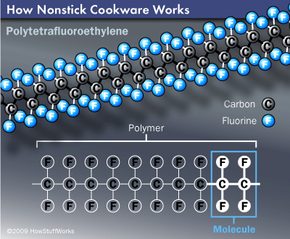
PTFE, or polytetrafluoroethylene, is the chemical name for what most of us just call nonstick coating. It works because of its molecular structure. PTFE is a fluoropolymer. This means it is a large molecule made of repeating units that include fluorine. Fluorine is the secret. Its electron structure is stable. It does not share electrons easily with other atoms.
The composition is simple. Two carbon atoms and four fluorine atoms repeat throughout the chain. “The molecular structure has an outer shell filled with fluorine atoms,” says William Raiford from DuPont. “The fluorine atoms shield the carbon atoms from reacting.”
Think of a high school dance. The fluorine atoms are the chaperones. The carbon atoms are the girls. Anything trying to stick to the pan is the boy trying to ask for a dance. The chaperones keep the boys away. In a frying pan, this keeps food from sticking.
Fluorine also gives PTFE a low coefficient of friction. This measures how hard it is for two surfaces to slide past each other. High friction means they grip. Low friction means they slide. PTFE slides easily. This gives it that signature slippery quality.
Other fluoropolymers exist. They have slightly different structures. These variations offer easier application or more strength. They can also provide decorative looks to the surface.
The next part of this story explains how scientists make this inherently nonsticky material stick to metal pans.