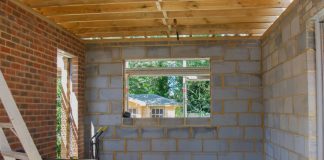
You can find soybeans in milk, candy, disinfectants, cooking oils, and margarine. Now, they are in home insulation. Chicago homeowners Jason and Jennifer LaFleur discovered this while renovating their kitchen. They skipped conventional fiberglass. Instead, they sprayed soybean-based foam into their walls.
The LaFleurs learned what other homeowners are finding out. Insulation isn’t just pink. It is also green. Whether it is made from shredded denim, hemp, or sheep’s wool, alternative materials do two things. They save money. They help the environment.
Reducing energy costs matters most here. Insulation keeps warm air in during winter. It keeps hot air out during summer. This matters because HVAC systems use roughly 44 percent of a home’s energy. The right insulation can lower that bill by 10 to 30 percent.
Technically, any insulation is “green” because it saves energy. But why do we distinguish specific eco-friendly products? For some, it means high recycled content. For others, it means no harmful chemicals. Some prefer natural materials entirely.
Зміст
How to Measure Insulation Effectiveness
The best way to judge insulation is the R-value. This measures resistance to heat flow. It ranges from less than R-1 to R-60. Higher R-value means better heat restriction. It also usually costs more.
Homes need an R-value between R-30 and R-60. If your material offers R-3 to R-4 per inch, you need about 10 inches of thickness to hit R-30.
Interested in greening your walls? Here are five picks for renewable insulation. They use recycled materials. They cut energy costs.
5: Sheep’s Wool
Sheep survive some of the harshest climates on Earth. Dall sheep thrive in the Arctic. They live on alpine ridges and steep slopes. Their wool adapts to these extremes. Scientists applied these properties to construction.
A 24-inch roll of R-13 wool insulation costs around $60.
When wool fibers compress, they form millions of tiny air pockets. These pockets trap air. This keeps homes warm in winter and cool in summer. Wool is breathable. It absorbs moisture from the air without losing heat retention capacity.
The outer layer of a wool fiber resists water. The inner layer loves water. It can absorb about one-third of its weight in moisture without feeling damp. When wool gets moist, it generates heat. This prevents condensation.
The R-value of wool is R-3 to R-4 per inch.
What does this mean for your wallet? You won’t need to adjust heating or cooling systems as often. This saves money. Wool keeps buildings cool during the day and warm at night. It is also more fire-resistant than other types.
4: Cotton
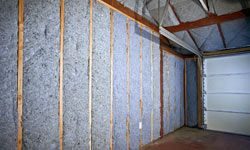

Why Switch to Cotton Insulation?
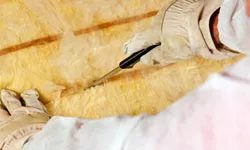
You’ve probably seen the burlap sacks in grocery stores. That’s the same plant used in one of the most eco-friendly insulation options available. Cotton denim scraps? Yeah, they get recycled into batts for your attic.
It’s natural. Renewable. And surprisingly similar to the fiberglass you’re used to seeing in hardware stores.
The R-value sits right in the middle of the pack. You’re looking at roughly R-3.2 to R-3.7 per inch of thickness. Same range as standard fiberglass. But here’s where it gets interesting for homeowners who care about air quality.
No formaldehyde.
Scientists have linked formaldehyde to various cancers. Cotton doesn’t have it. The fibers won’t itch your lungs or cause respiratory problems. It absorbs moisture well, too. And if you treat it with boric acid, it becomes flame retardant and insect repellent.
So why isn’t everyone buying it?
Cost.
It costs twice as much as fiberglass. That’s the trade-off. You pay more upfront for a material that’s safer to handle and easier on the environment.
The Superman of Insulation: Aerogel
If fiberglass is the workhorse, aerogel is the superhero.
Its R-value? R-10.3 per inch.
That’s nearly triple standard fiberglass. But how does a material get so effective? In a word: air.
Chemical engineer Samuel Stephens Kistler invented it in 1931. Legend says he bet a friend he could swap the liquid in a jelly jar for air without the jelly shrinking. He won. He removed the liquid and replaced it with air.
Today, the process is more industrial. Scientists remove liquid from silica under high pressure and temperature. What’s left is a solid that’s more than 90 percent air. It’s lightweight. And its molecular structure blocks heat from passing through.
Installation is straightforward for DIYers who aren’t afraid of thin materials. You get sheets that tack onto wall studs. One brand, ThermaBlok, even comes with a peel-and-stick backing. Just press it into place.
But again, the price tag stings.
It sells for up to $2 a foot. That’s expensive. You’re paying for performance in a small package. Use it where space is tight. Not for whole-house projects unless you have a deep pocket.
Rigid Polystyrene: The Plastic Paradox
Polystyrene sounds synthetic. It is. It’s plastic.
Yet, it’s considered a green material. Why? Because it saves massive amounts of energy.
The R-value ranges from R-3.8 to R-4.4 per inch. That’s solid. It comes in rigid foam boards. Easy to cut. Easy to fit. You can insulate the roof. The foundation. The basement walls.
It adds structural integrity to your walls, too. That’s a bonus. Plus, it doesn’t just come in boards. Spray foam options exist for harder-to-reach gaps.
It takes a long time to degrade naturally. That’s the downside. But it can be recycled. So it’s not entirely dead weight in a landfill.
Understanding U-Values
You’ve heard of R-values. But what about U-values?
R-values measure resistance to heat flow. Higher is better.
U-values measure how much heat passes through a material. Lower is better.
When you’re comparing materials, keep both in mind. A high R-value usually means a low U-value. But knowing the difference helps you read specs correctly.
Icynene: The Spray Foam Contender
The list ends here with Icynene. It’s a spray foam option. It expands to fill gaps. It creates an air seal.
But that’s where this part stops. We’ll look at how it compares to the rigid boards and cotton batts next time.
For now, you have the basics. Cotton for health. Aerogel for thin spaces. Polystyrene for structural strength.
Which one fits your project?
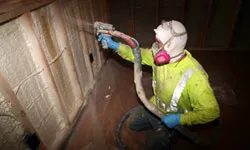
It’s thick like paint when it leaves the nozzle. Then it explodes. Icynene, a spray foam made from castor oil, expands nearly 100 times its volume. It hits the wall. It hits the ceiling. It fills every nook and cranny.
The result looks like a puffy sponge cake. Or the top of a lemon meringue pie. It is a thick blanket. A tight seal. This is what makes Icynene spray foam insulation so effective at stopping drafts. And noise. It muffles sound, too.
The numbers back it up. Icynene has an R-value of 3.6 per inch. That thickness adds up. You could see your energy bills drop by 30 to 50 percent. That’s not a small margin. It’s a lifestyle change.
How Icynene seals your home
The secret is in the bubbles. The foam traps air inside tiny pockets during the curing process. Once it sets, that air stays put. It doesn’t migrate. It doesn’t settle.
This creates an air-tight barrier. But here’s the catch. It’s too good at its job.
Icynene allows water vapor to escape. That’s crucial. It prevents mold from forming inside your walls. Most foams trap moisture. Icynene doesn’t. It breathes. But it doesn’t let air through.
That tightness creates a new problem. Your house becomes a sealed box. You need to manage the air inside.
The ventilation requirement
Because Icynene seals a house so tightly, builders must install a ventilation system. You can’t just spray and walk away. You need to pull stale air out and bring fresh air in.
In colder climates, this gets more complex. You need an air exchanger. It warms the incoming cold air before it enters the living space. Without it, your new efficient shell becomes a cold, stagnant trap.
The cost factor
There are downsides. Real ones.
First, it’s expensive. Icynene costs about three times as much as fiberglass batts. Upfront, that stings. It’s a significant investment. You’re paying for the performance. You’re paying for the castor oil base. You’re paying for the labor to spray it correctly.
But does it pay off? That depends on your timeline. If you stay in the home for decades, the energy savings might offset the initial cost. If you’re flipping in two years, it might not be worth it.
Is Icynene right for your DIY project?
This isn’t a weekend job. You can’t buy a can and spray your attic. The chemicals require professional equipment. They require protective gear. They require precision.
If you’re looking for green insulation options, Icynene fits the bill. It’s made from renewable resources. It reduces energy consumption. It doesn’t trap mold.
But if you’re on a tight budget, fiberglass is the alternative. It’s cheaper. It’s easier to install yourself. But it doesn’t seal air leaks. It doesn’t stop drafts. It doesn’t mute noise. It just insulates.
Making the choice
You have to weigh the pros and cons.
- Pros: Superior air sealing.