Forget the standard two thousand square feet that most of us count as a luxury. The ultra-wealthy operate on a completely different scale. We are talking about sprawling estates that redefine the concept of “home.” From sleek, ultramodern compounds to historic properties steeped in centuries of history, these are the six largest private residences on the planet. Note that we are excluding palaces like Versailles, which serve as museums rather than active dwellings. Let’s start at the bottom of the list and work our way up.
Зміст
6. The One
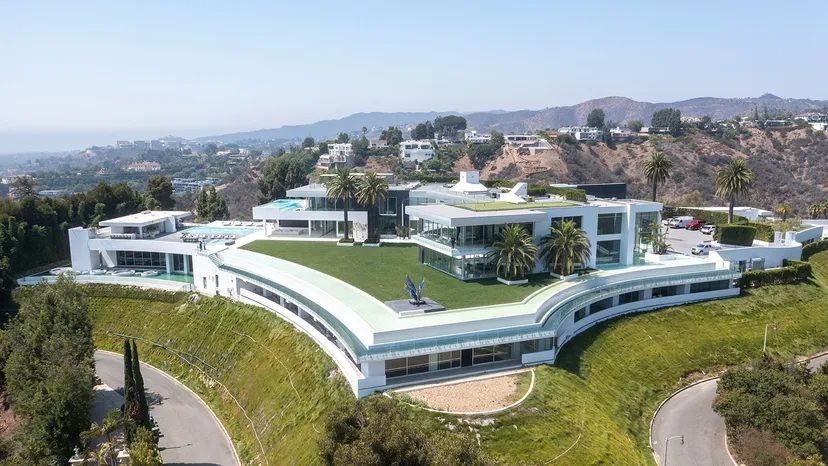
Located in the hills of Beverly Hills, California, The One is not just a house; it is a statement piece. When it hit the market, it made headlines for being one of the biggest houses in the world. The structure spans a staggering 105,000 square feet. That is not a typo. To put that in perspective, it is roughly the size of a small aircraft carrier.
The home sits on a 5.5-acre lot, offering privacy and views that stretch from the Pacific Ocean to Downtown Los Angeles. It features 15 bedrooms and 33 bathrooms. For comparison, that is more than double the number of bathrooms in the average suburban home.
The amenities are designed for someone who never wants to leave. There are two ballrooms. One is large enough to host 300 guests. The other is more intimate but still massive. A full-size basketball court sits inside the main living area, complete with glass walls that let in natural light. A professional-grade gym and a wellness center with a spa and sauna cater to health enthusiasts.
Entertainment is built into the DNA of the place. A 250-seat private cinema is equipped with the latest projection technology. There is also an indoor water park featuring a water slide that drops guests from the third floor into a pool below. For those who care about security, the property includes a high-tech surveillance system and multiple gated entries.
The architectural style is modern, with clean lines and expansive use of glass. This allows the interior spaces to blend with the outdoors. Infinity-edge pools on multiple levels offer views that seem to drop off the edge of the world. The materials used are high-end: natural stone, custom millwork, and smart home technology that controls everything from lighting to climate.
Why does someone need 105,000 square feet? For the ultra-rich, space is the ultimate luxury. It offers silence. Privacy. A buffer from the noise of the outside world. It also allows for a lifestyle that is entirely self-contained. You can live, work, exercise, and entertain without ever stepping foot outside the gate.
Is it practical? Maybe not for the average person. But for those who can afford it, the cost of maintaining such a property is negligible. The real value lies in the exclusivity. This is a home that exists in a category of its own. And as we will see, the “smallest” on our list is just the beginning.
Richard Saghian, the CEO of Fashion Nova, didn’t just buy a house. He bought a statement. In March 2022, he closed on “The One” in Bel Air for $141 million. It was the highest price ever paid for a single-family home in the United States. The estate was originally listed at $295 million. No one came close. The 21 bedrooms and 49 bathrooms were just too much for the market at that price point.
The property has a complicated history. It was built over ten years by Nile Niami, a former film producer. Things went wrong. Lenders foreclosed on the project. Niami’s firm had to file for bankruptcy. That’s when the mansion became a symbol of excess and financial trouble. It sat empty, a white elephant in Beverly Hills’ shadow, until Saghian stepped in.
The numbers are hard to wrap your head around. The house covers 74,000 square feet. That is 6,875 square meters of pure luxury. It is widely considered the largest modern house in America. For context, a standard suburban lot is tiny compared to this compound. Saghian got exactly what he paid for.
Amenities for the Ultra-Wealthy
Saghian is a fashion magnate. The home reflects that lifestyle. It includes everything you can imagine and some things you can’t.
- Five swimming pools. Yes, five. One is a 300,000-gallon saltwater infinity pool.
- A 30-car garage. This isn’t for storage. It’s a showroom.
- A nightclub. For private parties, obviously.
- A 10,000-bottle wine cellar. Climate controlled. Vaulted.
- A 5,000-square-foot master bedroom. That is 464 square meters. It has its own private terrace and spa.
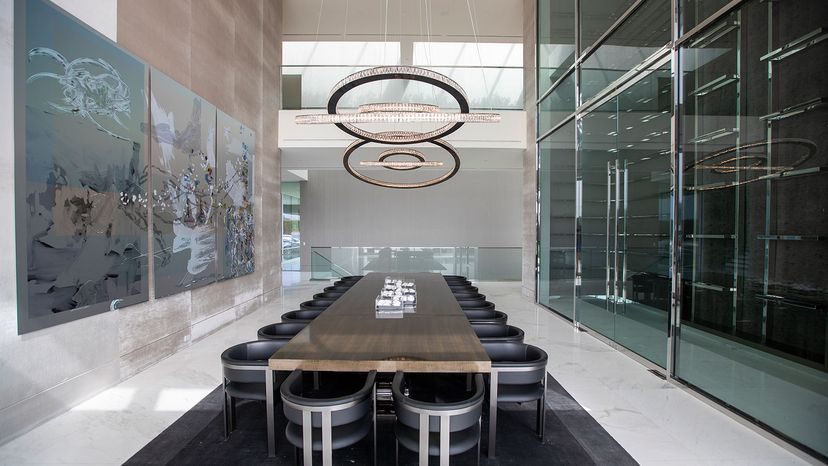
The design is modern. Clean lines. Glass walls. The kind of architecture that looks expensive from the street. Inside, it is equally opulent. Marble floors. Custom millwork. Lighting that costs more than most cars.
Why It Matters for Homeowners
You might not be buying a $141 million mansion. But the principles behind The One are relevant. Saghian didn’t just buy a house. He bought an experience. The home is designed for hosting. For entertainment. For status.
Think about your own renovation. Are you building for functionality or for flair? The One does both. The nightclub is a feature. The wine cellar is a feature. They are also lifestyle statements. When you renovate, ask yourself what you want the space to say. Do you want it to scream wealth? Or whisper it?
The One whispers loudly.
The Cost of Excess
$141 million is a lot of money. But the maintenance costs are higher. Keeping a 74,000-square-foot house in Bel Air running requires a team. Landscapers. Security staff. Pool technicians. HVAC specialists. The electricity bill alone is probably astronomical.
This is the hidden cost of luxury. It’s not just the purchase price. It’s the upkeep. If
Witanhurst: London’s Fortress of Solitude
If Villa Leopolda is about sun and sea, Witanhurst is about shadows and security. Located in Hampstead, London, this isn’t just a home. It’s a statement carved from stone and silence. The estate sits on a hill that overlooks the city, but you can’t see the city from inside. You can’t see anything from the outside, either.
The property is defined by its walls. Thick, imposing concrete barriers wrap around the 1.2-acre site. They aren’t there for style. They are there to keep the world out. Inside, the vibe shifts from open luxury to contained isolation. The house itself is massive, but the grounds are what make it legendary.
Why is Witanhurst so expensive?
It’s not just the square footage. It’s the privacy. In a city dense with neighbors and traffic, this place offers a fortress-like retreat. The owner, currently believed to be a Russian oligarch, paid around £105 million for it in 2016. That price tag includes not just the house, but the sheer impossibility of building something like this in modern London. Zoning laws, heritage protections, and the scarcity of land in Hampstead drive the value up. You aren’t buying bricks. You are buying invisibility.
The interior features high ceilings and minimalist design. Glass walls offer views of the trees, but only from a distance. The landscaping is meticulous. Geometric hedges. Pruned trees. A sense of order that feels almost sterile compared to the chaotic city below. It’s a place for working, thinking, or hiding.
Key Features of Witanhurst:
- Extensive Grounds: Over an acre of land, heavily fortified.
- High Security: Multiple layers of walls and private gates.
- Modern Architecture: Clean lines, concrete, and large glass panels.
- Location: Hampstead Heath, one of London’s most exclusive areas.
The contrast with Villa Leopolda is stark. One is a stage for public display, the other a vault for private life. Both are among the most expensive homes on Earth. One looks out at the Mediterranean. The other looks in at itself.
Which do you prefer? Open exposure or sealed isolation? The answer might say more about you than the houses.
Witanhurst remains a mystery. Who lives there? Who pays the bills? The walls keep the questions in, just like they keep the rest of London out.
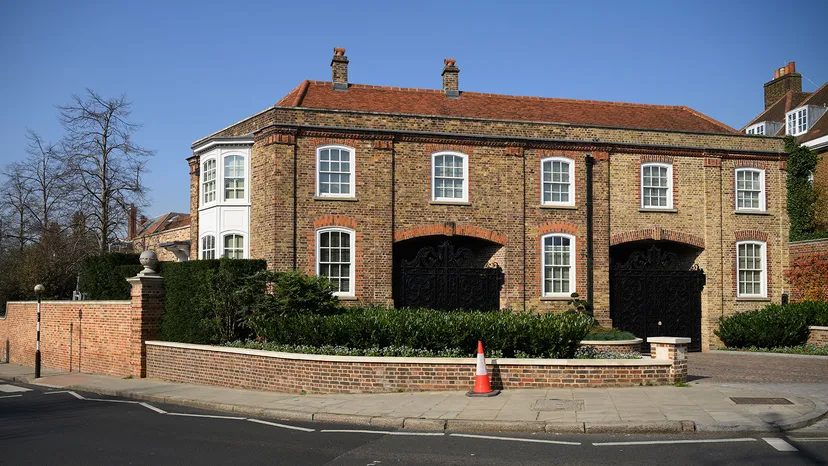
The title of London’s largest residential estate usually goes to a property that isn’t even up for sale or public tour. But right behind it sits Witanhurst, a staggering 90,000-square-foot (8,361 square meters) estate that redefines luxury. It’s currently owned by Andrey Guryev, a Russian oligarch who, like many in his bracket, likely doesn’t spend much actual time sleeping under its roof.
A Georgian Revival Masterpiece
Built in 1920, Witanhurst is a Georgian Revival mansion that has seen significant renovations in recent years. The price tag? Roughly $400 million. That’s not just for the land; it’s for the sheer scale of the amenities packed inside.
Think about what fits into that footprint:
– 25 bedrooms
– A 70-foot (21-meter) swimming pool
– A private movie theater
– A formal ballroom
– A sauna
– A massage parlor
It’s less a house and more a standalone resort. The scale is hard to grasp until you realize most people can’t fit their entire life in one of its bathrooms. Guryev isn’t believed to live there full-time, which makes the upkeep feel almost like managing a small business rather than a home.
3. Antilia
If Witanhurst is about sprawling historic grandeur, Antilia is about vertical dominance. Located in Mumbai, India, this 27-story skyscraper is owned by Mukesh Ambani, the chairman of Reliance Industries. The cost to build was estimated at over $1 billion, making it one of the most expensive private residences in the world.
The design defies traditional residential logic. It’s not just a house; it’s a self-contained vertical city. The interior features:
– A 50-car underground garage
– Three helipads
– A 160-seat cinema
– Multiple swimming pools
– A snow room
– A yoga floor with an adjoining meditation room
Architects from Perkins + Will designed it to withstand high winds and earthquakes, given its location in a seismic zone. The structure uses a concrete core that is 6 feet thick in some places, reinforcing it against Mumbai’s frequent monsoon rains and potential seismic activity.
Ambani’s family of 27 members shares the space, which includes staff quarters for over 600 employees. The sheer logistics of daily life here are immense. How do you manage a household that operates more like a small hotel? With layers of protocol, specialized staff, and infrastructure that rivals commercial buildings.
The contrast between Witanhurst and Antilia is stark. One is a horizontal expanse of early 20th-century elegance on the outskirts of London. The other is a vertical fortress of modern engineering in the heart of Mumbai. Both, however, serve the same purpose: to isolate their owners from the ordinary world.
For homeowners, the lesson isn’t about copying these amenities. It’s about understanding scale. In Witanhurst, space is the luxury. In Antilia, privacy and security are paramount. Most of us are working with square footage constraints, not excess. But the principle remains: your home should reflect
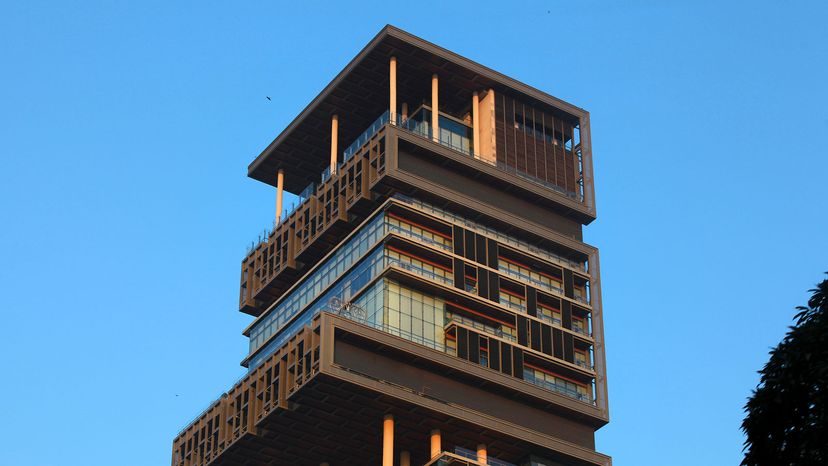
The Antilia Monolith
Let’s look at the math for a second. Four hundred thousand square feet. That is 37,000 square meters of sheer, unadulterated volume. It sits on Altamount Road in South Mumbai, a stretch of pavement so expensive it probably has its own zip code. This is the home of Mukesh Ambani, an Indian business magnate who decided that a house wasn’t enough. He wanted a statement carved out of the sky.
Currently, this structure holds the Guinness World Record for the largest house owned by an individual. It isn’t even the biggest private residence on some broader, less rigorous lists, but it is the third biggest on this specific compilation. The number three feels arbitrary, doesn’t it? When you are this far off the charts, rank is meaningless.
The building itself is an engineering nightmare that somehow works. Ambani commissioned it to survive an earthquake up to 8 on the Richter scale. You can feel the ground shake in Mumbai, sure, but not here. The structure is 27 stories tall, yet its massive, bulbous design gives it the vertical presence of a standard 60-story office tower. It dominates the skyline, a dark, reflective monolith against the humidity.
Living here requires a workforce. Six hundred staff members manage the property. That is a small city within a city. They handle everything from the nine high-speed elevators to the upkeep of the spaces. Six of those floors are dedicated solely to parking. We are talking about space for up to 168 cars. Not a collection. One hundred and sixty-eight.
The amenities are tailored for a life removed from the mundane. There is a movie theater. A beauty salon. An ice cream parlor. And because Mumbai is brutally hot, with temperatures that press down on you like a wet blanket, the house includes a room where artificial snowflakes shoot from the walls. You can stand in your living room and feel winter while the rest of the city cooks.
The cost to build this behemoth is estimated between $1 billion and $2 billion. Money is just numbers until it becomes steel and glass. Ambani turned his wealth into a fortress.
Buckingham Palace
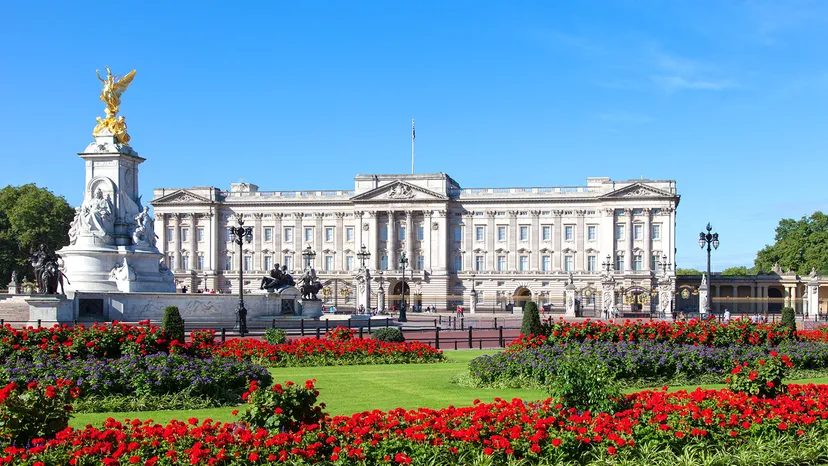
The idea that monarchs live in standard corporate offices is a myth. At Buckingham Palace, the sovereign’s residence doubles as the administrative heart of the British monarchy. But here is the twist: the King does not own it. Legally, the palace belongs to the Crown Estate, an autonomous commercial entity. This means the monarch cannot sell the property or treat it as personal equity. Instead, the Crown Estate remits its profits to the British Treasury. In exchange, the sovereign receives a fixed annual grant to cover official duties and upkeep.
It is a complex financial relationship, but the physical reality is even more staggering. The palace is a maze of 775 rooms. That number breaks down into 52 royal bedrooms and guest suites, 19 state rooms for official functions, and 188 bedrooms for staff. You can tour the public areas, but the private wings remain strictly off-limits. The highlights for visitors are the State Dining Room and the White Drawing Room, famous for its Victorian-era gilded piano. The entire 828,000-square-foot estate is valued at approximately $4.9 billion, a figure that underscores why it is managed by a separate corporate structure rather than individual ownership.
1. Istana Nurul Iman Palace
If Buckingham Palace is grand, the Istana Nurul Iman Palace in Brunei is in a different league entirely. It serves as the official residence of the Sultan of Brunei and the seat of his administration. Unlike the UK model, where the monarch is a tenant of a state-owned corporation, the Sultan’s home is a massive complex that includes administrative offices, prayer rooms, a library, and even a mosque with a capacity of 5,000 people.
The palace is often cited as the largest residential building in the world by floor area, though exact figures vary due to the sensitive nature of its security. It sits on the banks of the Brunei River and encompasses multiple buildings connected by walkways. While Buckingham Palace has 775 rooms, the Istana complex is designed to host thousands of guests and staff, reflecting the Sultan’s role not just as a head of state but as a central figure in a nation’s economic and religious life.
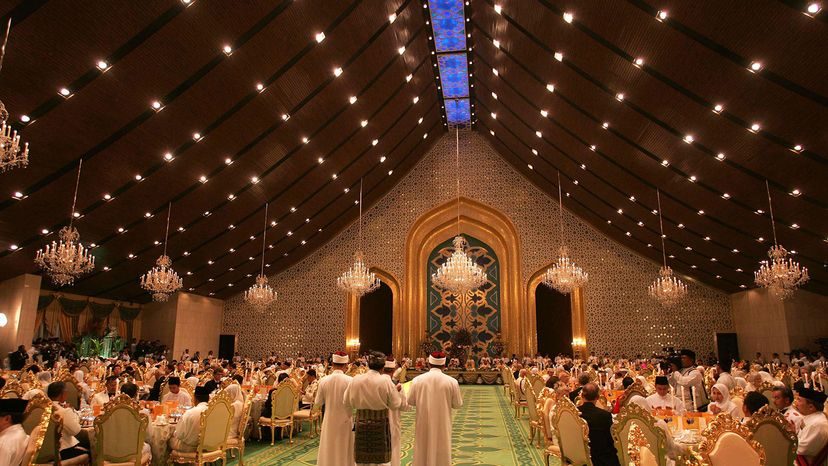
The Palace That Redefines “Home”
You think your weekend DIY project is big? Try maintaining 257 bathrooms.
The Sultan of Brunei lives in Istana Nurul Iman. It’s not just a house. It’s a government seat. It’s a statement. Built in 1984, the construction cost hit over $1.4 billion. That was back when money meant something else. Today, it holds the Guinness World Record for the largest residential palace.
Let’s look at the numbers. They don’t lie.
The estate covers more than 2.1 million square feet. That is 200,000 square meters of pure excess. Inside, there are 1,788 rooms. 257 bathrooms. 44 marble staircases. You could spend a lifetime walking the halls and never see every corner.
It’s bigger than Buckingham Palace. Bigger than the Palace of Versailles. By a lot.
The amenities are what separate a mansion from a monument. There is a massive mosque with a golden dome. A banquet hall that seats 5,000 people. Five swimming pools. A garage for 110 cars. The polo ponies? They get air-conditioned stables. Because why not?
You might ask, how do you tour a place like this? You can’t just book a night. For a few days after Ramadan, the gates open. Entry is free. If you’re lucky, or just right, the Sultan or his wife will greet you in person. Gender dictates who you meet. It’s the only time the public gets close to the throne.
American Scale vs. Old World Grandeur
Across the ocean, the largest house in the United States tells a different story.
The Biltmore Estate sits in Asheville, North Carolina. It’s a chateau. A 19th-century country home for industrialist George Vanderbilt. It doesn’t try to be the biggest in the world. It just wants to be the biggest in America.
The footprint is 175,000 square feet. 250 rooms. It’s massive, sure. But compared to Istana Nurul Iman, it looks like a cottage. Still, it’s a serious property.
Inside the Biltmore, you find 65 fireplaces. A banquet hall. A bowling alley. An indoor pool. It’s designed for leisure. For hosting. For showing off the wealth of the Gilded Age.
Both estates answer the same question: how much space does one person need?
The Bruneian answer is 2.1 million square feet. The American answer is 175,000.
One is a political fortress. One is a leisure retreat. Both require teams of staff to keep running. Neither is something you can DIY. You can’t just add a golden dome to your garage. You can’t just knock down a wall and gain 250 rooms.
But the principle is the same. Space is power. And power requires maintenance.